A Beginner’s Guide to U.S. Farm Equipment for H-2A Workers
Starting a job on a U.S. farm is an exciting step. With the right mindset and a basic understanding of what equipment you’ll be using in your daily H-2A job, you can build confidence quickly and set yourself up for success from day one. Today’s blog breaks down the different types of farm equipment commonly found on U.S. farms and ag businesses.
We’re also using American terminology to help you familiarize yourself before landing an H-2A interview or arriving for your first day of work in America. This understanding will help you stand out from others.
1. Tractors
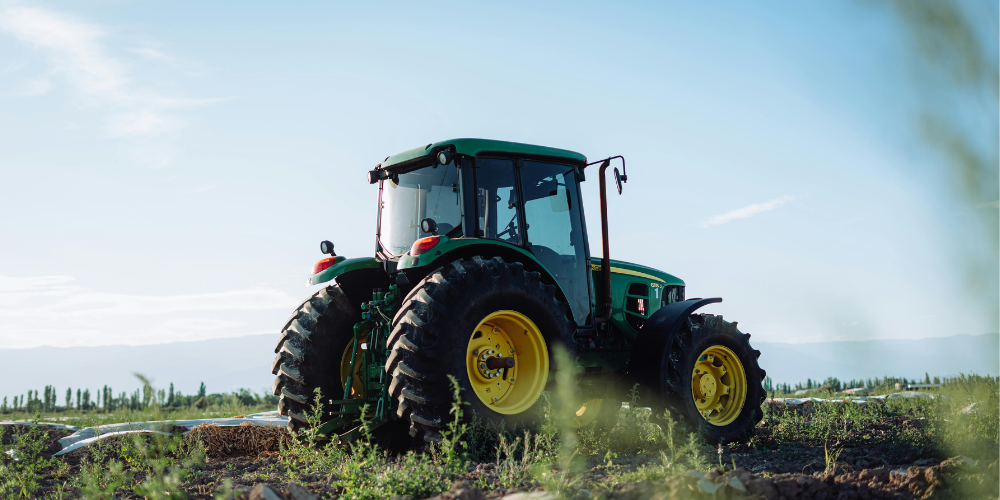
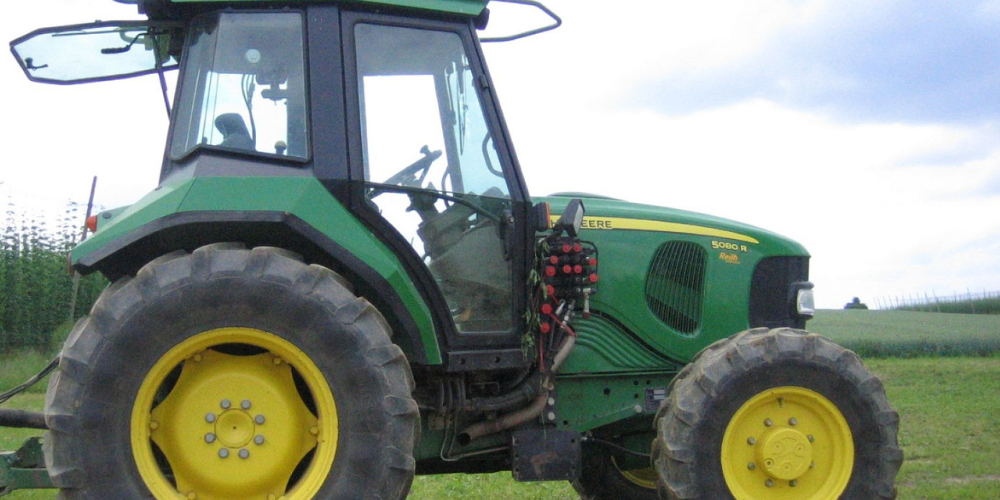
The most common piece of equipment on an American crop farm is the tractor. There are many different tractor brands, sizes, and types. Tractors are versatile pieces of equipment, and most types are equipped for various add-on attachments and tools to complete various other tasks on the farm.
Key skills:
Driving, operating, and steering
Knowledge of attachments and connection procedures (also called implements, more on these later)
Safety awareness
Basic maintenance and repairs
2. Harvesters and combines
Another staple of American crop farm equipment is combine harvesters. They’re known as combine harvesters because they combine several harvest tasks into one machine. The full truth is we could do an entire post on tractors, harvesters, and combines, including the different types, brands, sizes, and their versatile functions on an American farm. For now, this is just a basic overview of that equipment.
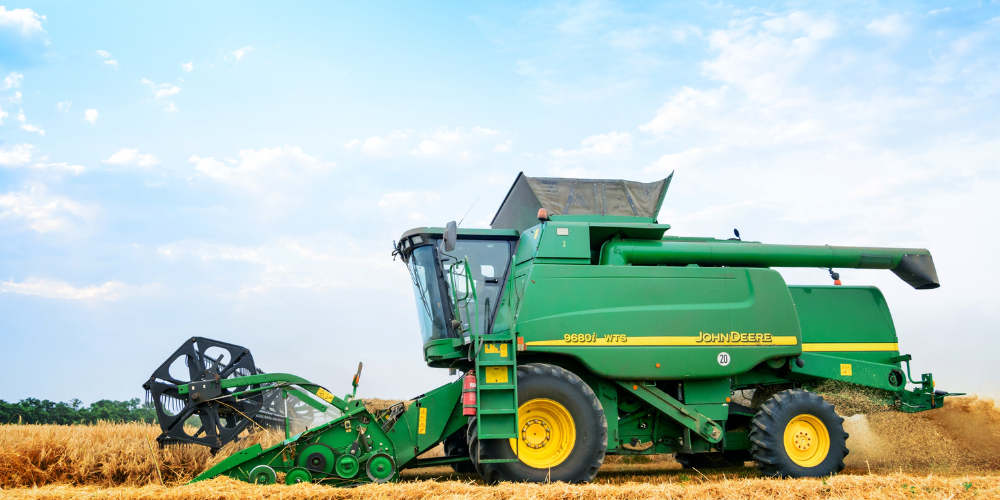
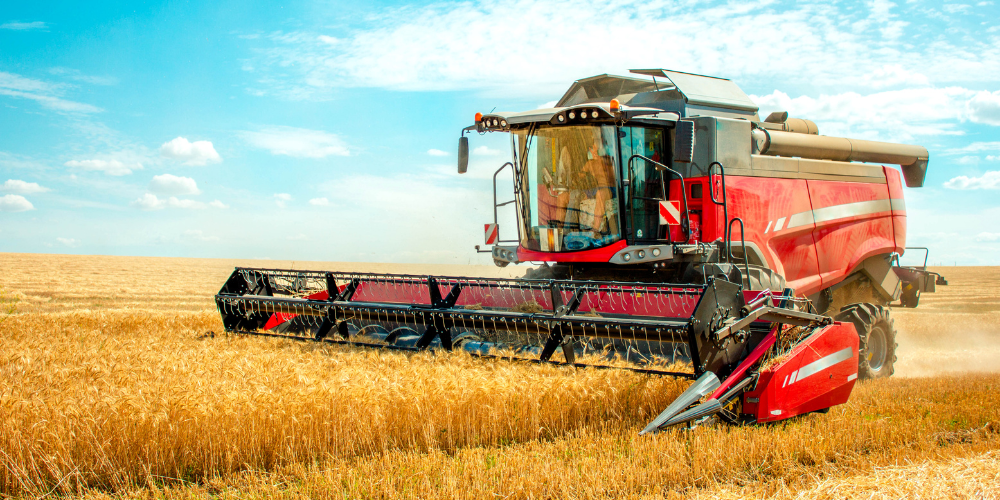
Essential harvest functions “combined” into one machine process:
Cutting or intake
Threshing (separating edible grains from inedible trimmings and stalks)
Cleaning
Key skills:
Driving, steering, and generally operating the machine
Unloading harvested grains (typically unloaded and trucked to the grain elevator)
Maintenance, cleaning, and general repairs
Read more about different types of farm jobs in America
3. Planters and seeders (also called seed drills)
Planters and seeders, or seed drills, are typically designed as tractor attachments or implements, meaning they connect to a tractor, which then powers the piece of equipment. These implements are used for, you guessed it, planting seeds in the ground after it has been prepared for planting, typically by tilling the soil. It is possible to use a simple walk-behind planter or seeder, but most large American ag operations use tractor implements or self-propelled seeders to scale this critical task.
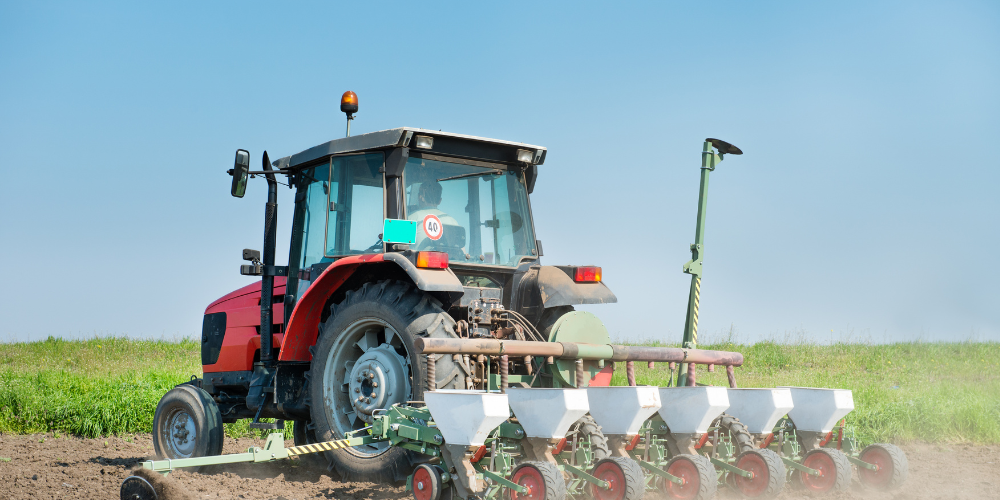
Planter implement/attachment on tractor
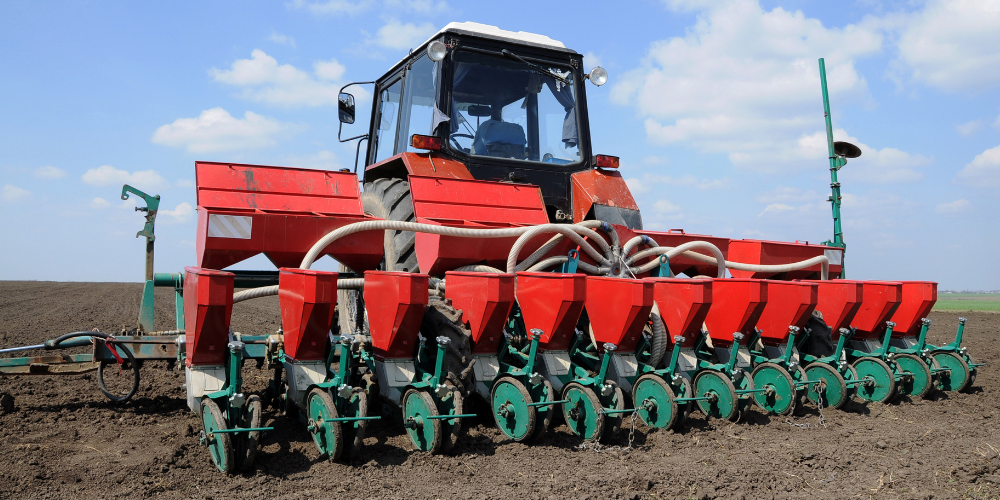
Self-propelled planter
Key skills:
Driving straight rows to plant seeds
Monitoring seed flow/output (at times using technology)
Monitoring and refilling seed tanks as you drive (you don’t want to keep driving rows with an empty seed tank)
Ensure seed placement at the correct depth and spacing
4. Irrigation Systems
One of the most widely used pieces of equipment on American crop farms are irrigation systems. Most farms would prefer natural rain, but irrigation systems are critical when there isn’t enough rainfall or for crops that require more water than normal. The two most common types of irrigation systems are:
Irrigation pivots: Typically called “center irrigation pivots,” they work by rotating around a central pivot point to water crops in a circular pattern.
Drip irrigation systems: Characterized by water lines or hoses with small perforations supplying water directly to a plant’s roots, by dripping, rather than overhead spraying or mimicking direct rainfall. Drip irrigation is praised for reducing a crop’s water consumption, sometimes by up to 50%.
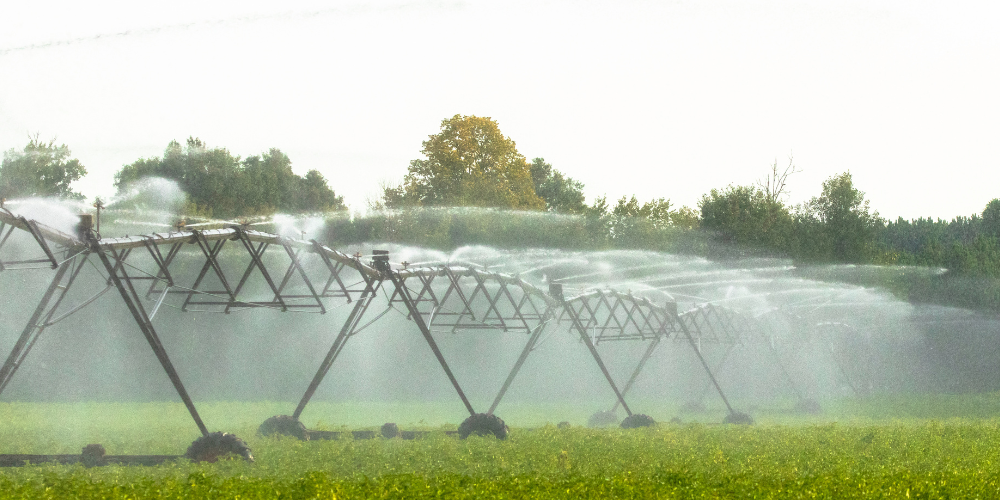
Irrigation pivot
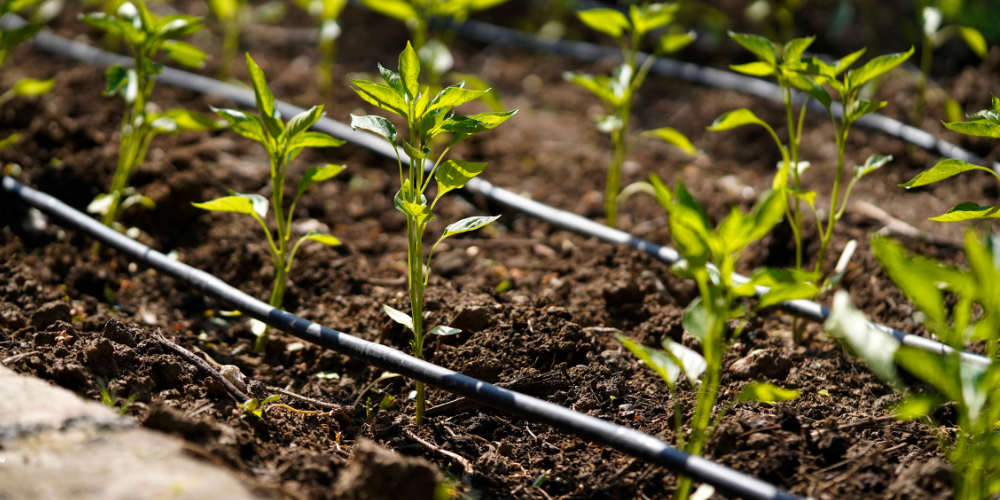
Drip Irrigation
Key skills:
Moving, installing, and monitoring systems
Checking for and fixing leaks
Monitoring and adjusting water flow
5. Sprayers
Sprayers are essential for large American ag operations and are used for spraying and applying various herbicides, pesticides, and fertilizers. It’s important to note that some states in America require special licenses or certifications to mix and apply certain chemicals used in sprayers. Sprayers can be tractor implements or self-propelled machines, independent of the tractor.
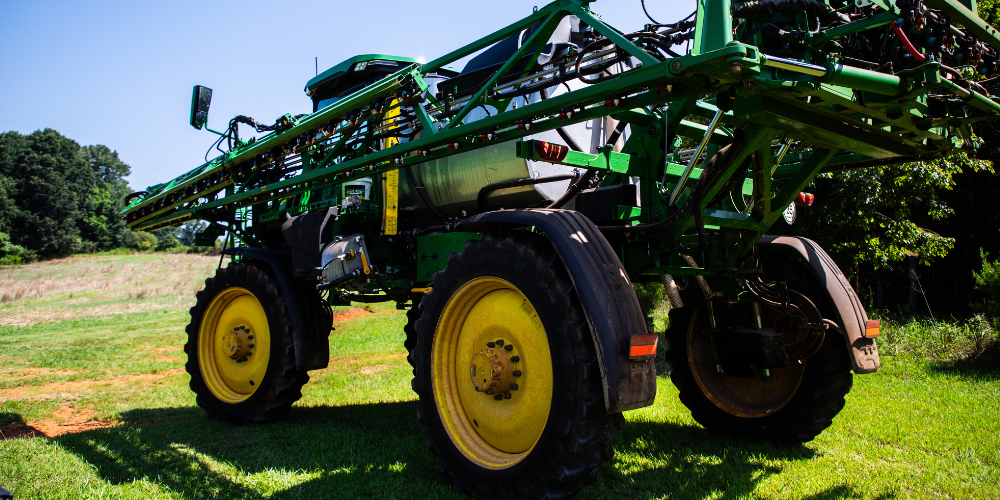
Self-propelled sprayer
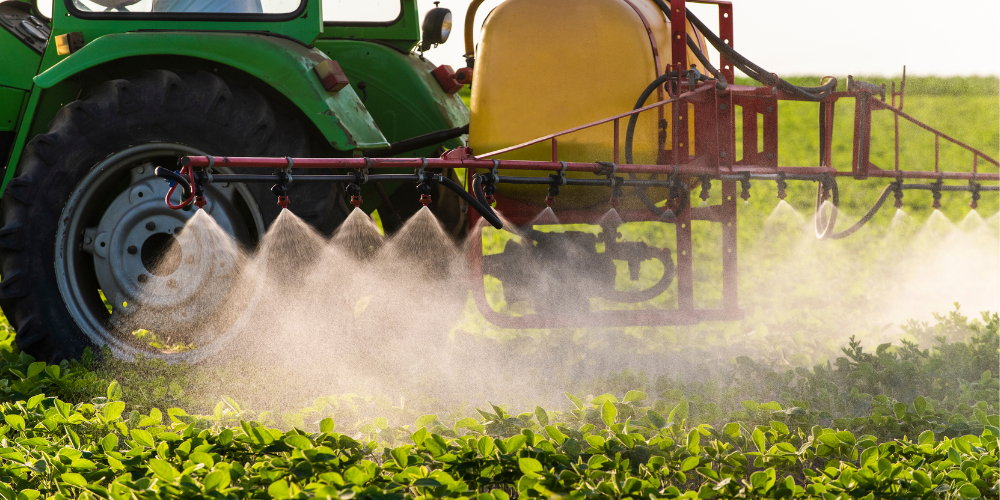
Sprayer implement/attachment on a tractor
Key skills:
Preparing and mixing chemicals for spraying using the correct ratios
Monitoring spray coverage and making small adjustments
Driving and steering sprayers to maximize the coverage area
Understanding strict sprayer safety rules and laws
6. Farm trucks and trailers
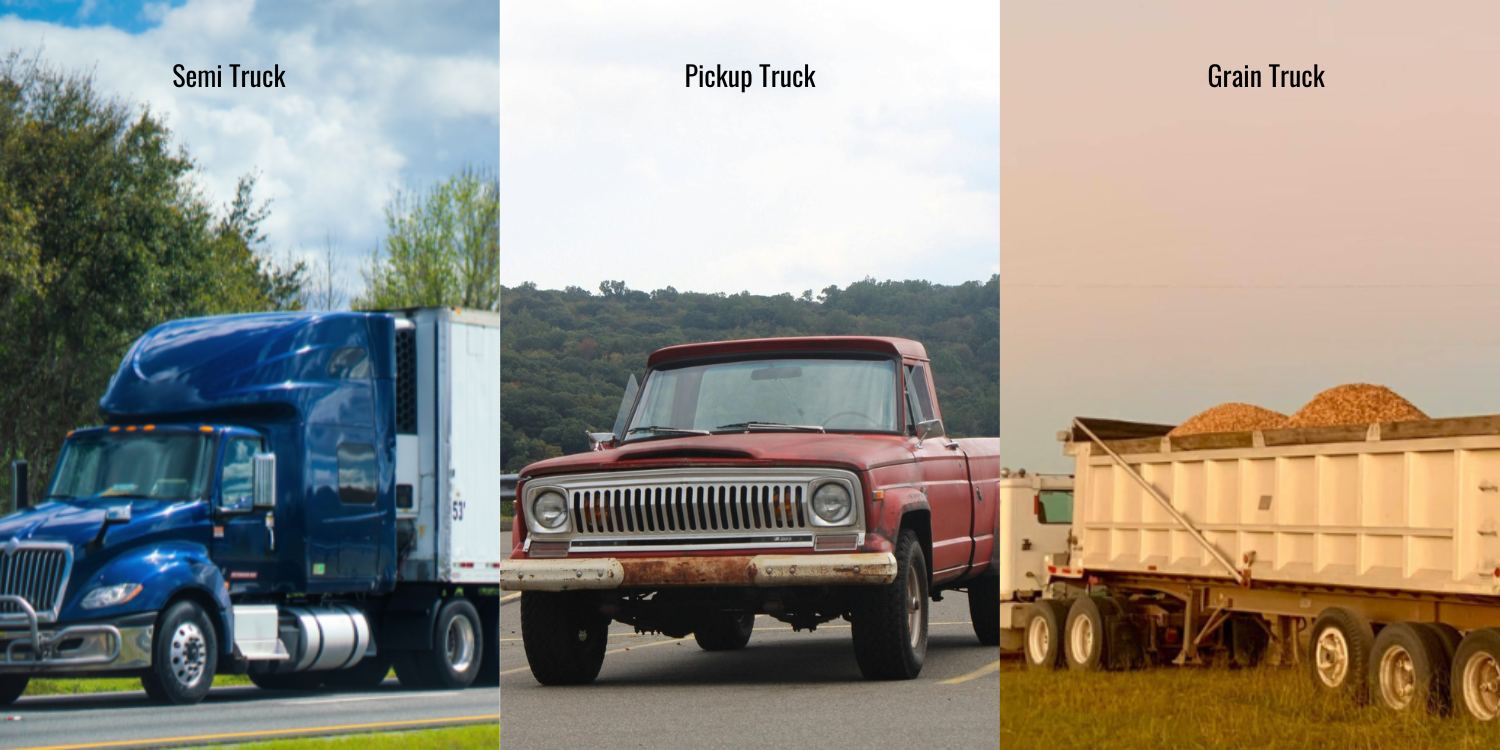
The food grown on a farm doesn’t make its way to your table without a truck to transport it. Trucks are used for transporting crops, tools, equipment, supplies, and even farmworkers. Different types of farm trucks include:
Pickup trucks
Grain trucks
Semi-trucks
Dump trucks
Flatbed trucks

Key skills:
Driving and steering
GPS and location technology
Loading and unloading
Securing cargo for hauling or transporting
Connecting and disconnecting trailers
Basic maintenance or repair
Check out the 5 skills you learn during farm truck training
7. Hand tools and small equipment
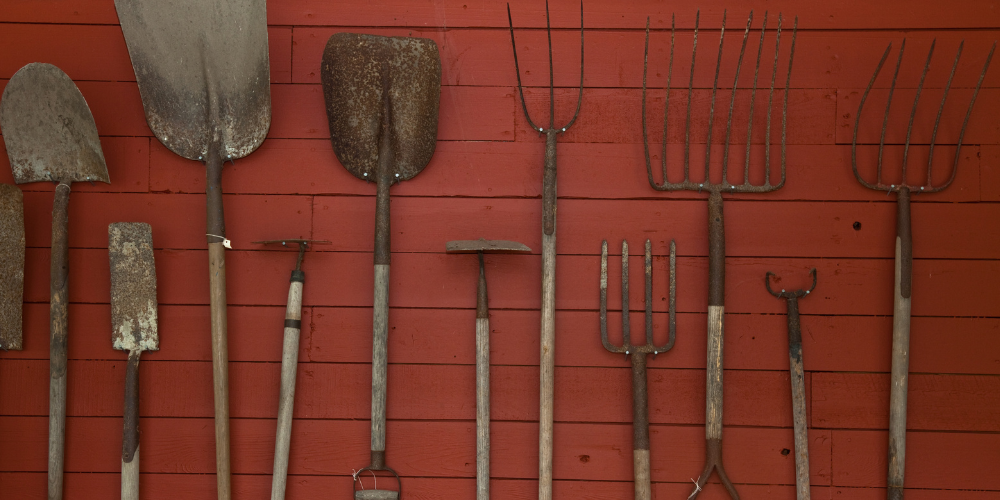
Rounding out the different types of U.S. farm equipment are simple hand tools and small equipment. Regardless of what you’re hired to do on an American farm, chances are you’ll need to have an understanding of basic hand tools and small pieces of equipment, such as:
Shovels, hoes, and pitchforks
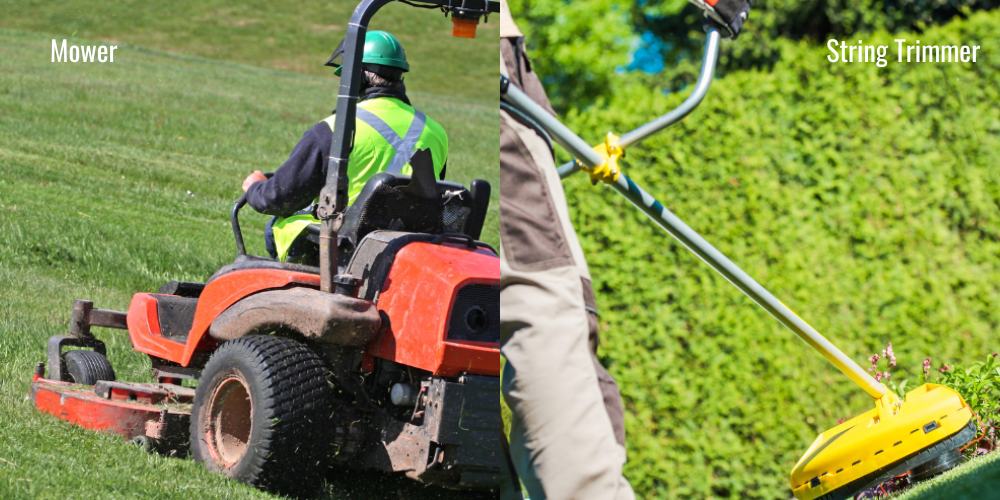
Mowers, string trimmers (also called weed-eaters or weed-wackers), chainsaws, blowers, and other basic property maintenance tools
Pruners, scissors, scythes, and other manual cutting equipment
Hand tools such as ratchets, wrenches, hammers, pliers, and screwdrivers
Key skills:
Safety awareness
Storing, organizing, and identifying different tools
Understanding measurements and fittings (especially for hand tools)
Simple maintenance, cleaning, and repair
Want to feel confident before you arrive? Start preparing now and build the skills you need to succeed on American farms.
At USA Truck Labor, we go above and beyond to prepare our candidates for real H-2A jobs on American farms. Our team has been to America and witnessed firsthand what U.S. farm employers are looking for from their seasonal H-2A employees, and now we’re passing that experience on to you.