5 Skills You Learn in Farm Truck Training
Nearly every industry on earth relies on trucks and truck drivers to succeed. The American agriculture industry is no different. Farms in the United States rely on many different types of trucks to haul crops, tools, supplies, and equipment, among other things. Without a doubt, if you’re looking to work on an H-2A visa in American agriculture, employers will want you to have truck driving skills. That’s where learning how to drive a farm truck comes into play.
Training before you land a job can take your farm career to the next level by creating more opportunities and earning higher wages. Farm truck drivers are in high demand in the United States, so a skilled driver has a lot of potential for a lasting, rewarding career. Today’s blog breaks down 5 skills you’ll learn in farm truck training:
Safety
Trip inspections and maintenance
Driving skills
Driving in different environments
Theoreticals
1. Safety (first)
Safety can’t be taught. It’s a mindset that persists through every action you take. Safe driving on an American farm is critical to your safety and the safety of others. There’s currently a big push for safe truck driving in America, to the point where many states aren’t issuing Commercial Driver’s Licenses (CDL) to foreign workers, regardless of legal status on an H-2A or H-2B visa.
During training, drivers can expect to learn the following safety practices:
Defensive driving techniques
Proper braking and turning distances
How to safely navigate rural roads, farm fields, and busy highways
Accident prevention
Awareness of surroundings
Trip inspections and maintenance best practices
Following safety regulations protects both you and others on the road. These skills not only reduce risk but also help build confidence and trust with employers who rely on safe, dependable drivers during critical farming seasons. Safety awareness is perhaps the greatest skill you’ll practice and acquire during your training course. Everything else you’ll learn during training builds off of safely operating a farm truck.
2. Trip inspections and maintenance
Before you hit the road to learn to drive a farm semi-truck, you’ll learn how to perform basic maintenance and conduct pre- and post-trip inspections. Pre- and post-trip inspections involve checking some of the following truck components:
Tires and wheels: Use the ABCs (abrasions, bulges, cuts) to inspect tires and tire pressure levels, tread depth, and check wheels and lug nuts for signs of rust, cracking, or other defects in the lug nuts and wheel.
Fluids: Monitoring and measuring fluid levels such as brake fluid, oil, coolant, power steering, etc, to ensure no leaks or low levels.
Coupling system: Checking the trailer coupling system, including hoses and cable lines, the fifth wheel, and the release arm.
Braking system: Checking the braking system for leaks, sturdiness in the pedals, etc.
Steering system: Checking the shaft and gearbox for secure mounting, stability, no play in the components, and leaks.
Belts and hoses: Check and inspect alternator, water pump, and air compressor belts for cracks, fraying, and proper tension. Check hoses for leaks or cuts.
Trailer: Check for any defects such as holes, rust, or dents that could cause issues. Check the pins, the door hatches, etc.
Inside the cab and gauges: Ensure a safe start by depressing the clutch, check gauges are functioning properly, oil pressure stabilizes, air pressure checks, etc.
Lights and electrical: Check all brake lights, turn signals, running lights, and electrical connections and wires to ensure those are not frayed or cracked with exposed wires.
Pre-trip inspections are critical for your safety, the efficiency of the ag operation, and for keeping the roadways and other drivers safe as well. Conduct a pre- and post-trip inspection every time you get behind the wheel, park the truck, or drop a loaded trailer. American ag employers will love that you have a working knowledge of inspections and understand the underlying safety aspects of these practices.
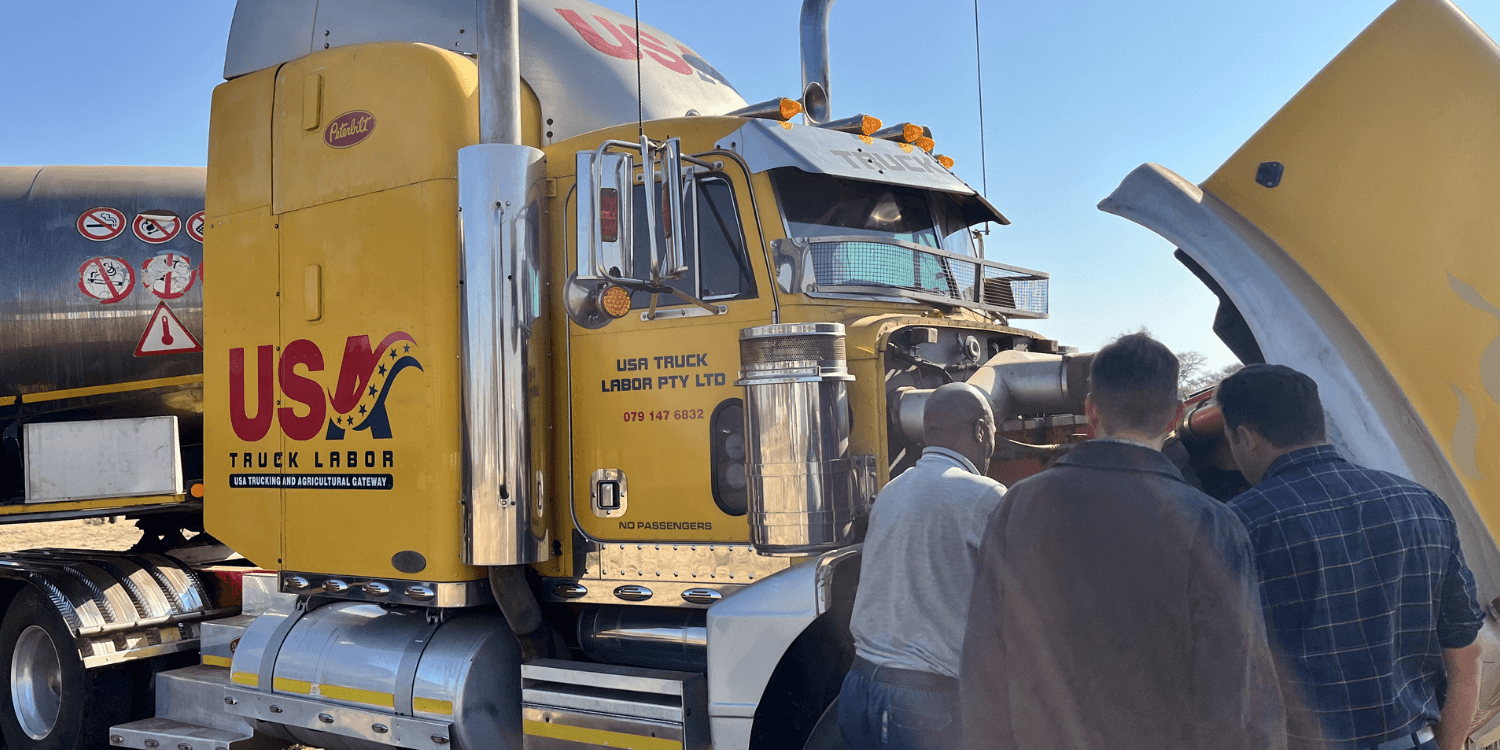
Farm truck training also covers basic maintenance of farm semi-trucks, which is critical for roadway safety and efficient ag operations. Trucks and equipment breakdowns can cost your employer thousands in lost productivity and downtime.
Harvest time is an especially vulnerable time for breakdowns, and the last thing an American employer wants is to be out of commission when they need to get crops out of the ground. A few basic maintenance tasks you’ll learn include:
Oil changes: Replacing engine oil and oil filters as recommended by the manufacturer to ensure engine longevity and prevent breakdowns.
Air filters: Check, clean, and replace air filters when necessary (every 10-20k miles) to maintain engine performance and fuel economy.
Brake system: Conduct a more thorough inspection of brake pads, rotors, and drums to prevent braking failures (30% of truck crashes involve brake issues).
Lubrication: Grease all moving parts, including steering, fifth wheel, and suspension components.
Other basic maintenance tasks that you can perform will be a bonus for your future career and an American employer. The more skills you have, the more valued you will be by your farm employers.
Read more about turning H-2A jobs into a long-term career option.
3. Farm truck driving skills
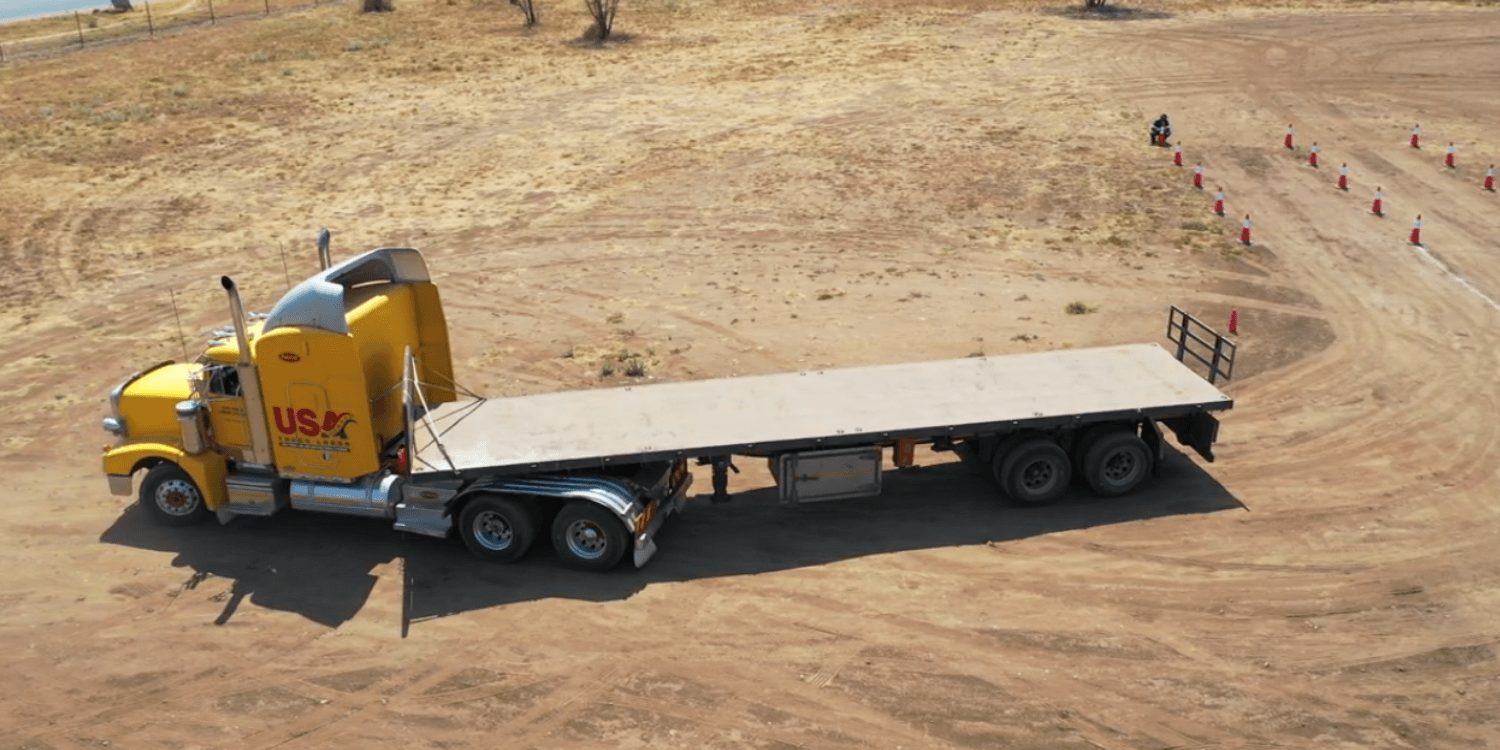
Once you’re prepped on safety measures plus trained on pre- and post-trip inspection protocol, you’re ready to get behind the wheel of our Peterbilt 18-speed Left-hand drive Fuller Gearbox semi farm truck. Farm truck driving is much different from “around town” or highway driving, even though you’ll need skills for driving in those environments as well. Some of the introductory truck driving skills you’ll learn include:
Shifting
Mastering the Fuller Gearbox
Braking techniques while loaded and empty
Backing, docking, and parking
Coupling and decoupling trailers
Harvest driving techniques
The bulk of our training program is designed around farm truck driving skills. From shifting through gears to braking with a fully loaded trailer, you’ll practice real-world truck driving techniques. Likewise, much of the focus is also place on mastering the Fuller Gearbox, which is one of the toughest aspects of driving an American farm semi-truck. Since most American trucks use a Fuller Gearbox, our team places a strong emphasis on mastering this aspect of the truck.
4. Driving in different environments
Driving a semi-truck in American ag requires experience operating across various environments. Simply put, farm truck driving is not confined to driving on perfectly paved roads or around the empty farm with no traffic. For example, American farms need crops harvested, loaded into trucks or trailers, and hauled to grain elevators for storage, and many employers need skilled H-2A workers to perform those driving tasks. That means driving across various environments, from dirt roads to grass fields to paved roadways. Here are some of the different types of environments you’ll learn to drive in:
On the farm: You’ll learn to drive on an American farm, which may include navigating around small buildings, crossing pasture or field divides, following alongside harvest equipment, and traversing various terrains, just to name a few.
Around town: Farm trucks will eventually need to be taken off the farm and into town environments. Driving around town takes skill and patience as well as a mastery of the Gearbox because it most often involves stop-and-go traffic combined with hazards like other vehicles, railroad crossings, and pedestrians.
Highways: You’ll eventually need to drive at high speeds in a highway environment. Highway driving requires focus and a keen eye toward safety.
Various terrains: You’ll need to be comfortable driving in various terrains around the farm and in town. You’ll be exposed to driving on dirt, grass, gravel, and more.
Farm driving is diverse and intense, so you’ll need to be comfortable with adapting to different surfaces and terrains at varying speeds, around vulnerable objects such as livestock, crops, kids, buildings, fences, and other farm structures.
5. Truck driving theoreticals
One of the goals of the training program(s) is to prepare you for a successful future career in American ag and transportation. Theoretical training and testing are one of the best ways to achieve that goal. Here’s some of what theoretical testing involves:
English proficiency: You’ll be tested on your English proficiency to ensure you’re ready for American farm jobs. American employers love hiring South Africans for skilled jobs because of our bilingual culture and ability to speak both Afrikaans and English.
U.S. traffic laws: gain exposure to U.S.-based traffic laws, which differ greatly from those in South Africa and involve learning things like road signs, directional sign training, and truck-specific rules and regulations.
Preparation for Entry-Level Driver Training (ELDT) courses: You’ll learn best practices for driving a truck in America and earning a Commercial Driver’s License. Some American ag employers require workers who can quickly and efficiently pass ELDT to eventually earn their CDLs (not all states are issuing CDLs to immigrant workers).
Terminology and translation: You’ll be tested on American ag-specific terms and translations so you can hit the ground running when you get to your American farm job.
Airbrake test: You are tested on all aspects of the air brake system and its components, including when and how to utilize air brakes as well as troubleshooting common issues.
Theoretical training is designed to teach you and test you on the skills you can’t practice in the truck, but will need to know to be a top farm work candidate. Theoretical testing is designed to put you in a position to succeed in your ag career. Whether you’re working as a farm laborer, equipment operator, or farm truck driver, it’s critical to build your skills to become the type of employee that American ag employers are looking for in their workers.
Build your skills at USA Truck Labor’s farm truck training program
Our 4-day and 2-day training programs are designed to equip you with the skills and education you need to not only get a job, but create a long-lasting career in American agriculture. Our team understands what American H-2A employers need from their skilled workforce, and we use our first-hand knowledge to design our training courses.
Get trained. Get verified. Take your career to the next level.