A commercial driver’s license (CDL) in America is similar to a code 14 license here in South Africa. A CDL allows the driver to operate trucks and other commercial vehicles on American roadways. For H-2A workers, this might mean driving large semi-trucks to haul crops, tools, equipment, and more to places like grain elevators, crop fields, and other farms.
We get asked about CDLs a lot here at USA Truck Labor, so to help, we’re answering your questions about H-2A truck-driving jobs and CDLs.
Different types of CDLs in America
There are three different classifications of CDLs in America:
Class A: Allows you to operate combination vehicles (usually a truck with a towed vehicle) with a Gross Vehicle Weight of 26,001 pounds (lbs) or more, with the towed vehicle weighing 10,001 pounds or more. Examples include:
Semi-trucks and tractor-trailers
Flatbed trucks with trailers
Grain trucks pulling large trailers
Livestock transport trucks
Tanker trucks
Truck and trailer combinations
Class B: Allows you to operate a single vehicle with a Gross Vehicle Weight of 26,001 lbs or more, and possibly with a towed vehicle weighing 10,000 lbs or less. Examples include:
Straight trucks
Large dump trucks
Box trucks
Cement mixers
Garbage trucks
Certain large delivery trucks
Class C: Covers commercial vehicles that do not meet the weight requirements as Class A or B but are designed to transport either 16 or more passengers or hazardous materials in a way that requires placarding under federal regulations. Examples include:
Smaller passenger buses
Certain school buses
Passenger shuttle vehicles
Smaller hazardous-material transport vehicles
Learn more about American farm measurements
When is a CDL needed for H-2A jobs?
A CDL is required for an H-2A job when the employer’s Job Order states that a CDL is required. With H-2A, if a CDL is required for the job, it is the employer’s responsibility to disclose that information on their ETA-790 Job Order. If you’re interviewing for an H-2A job that requires a CDL and you don’t have a CDL, then it is up to the employer to either pay for you to acquire a CDL or hire another worker who already has one.
CDLs are required when:
An employer operates a commercial farm business such as a crop spraying or custom harvesting business that uses semis to transport equipment to the fields.
Truck driving duties extend beyond simply transporting crops within a 150-mile radius to a grain elevator.
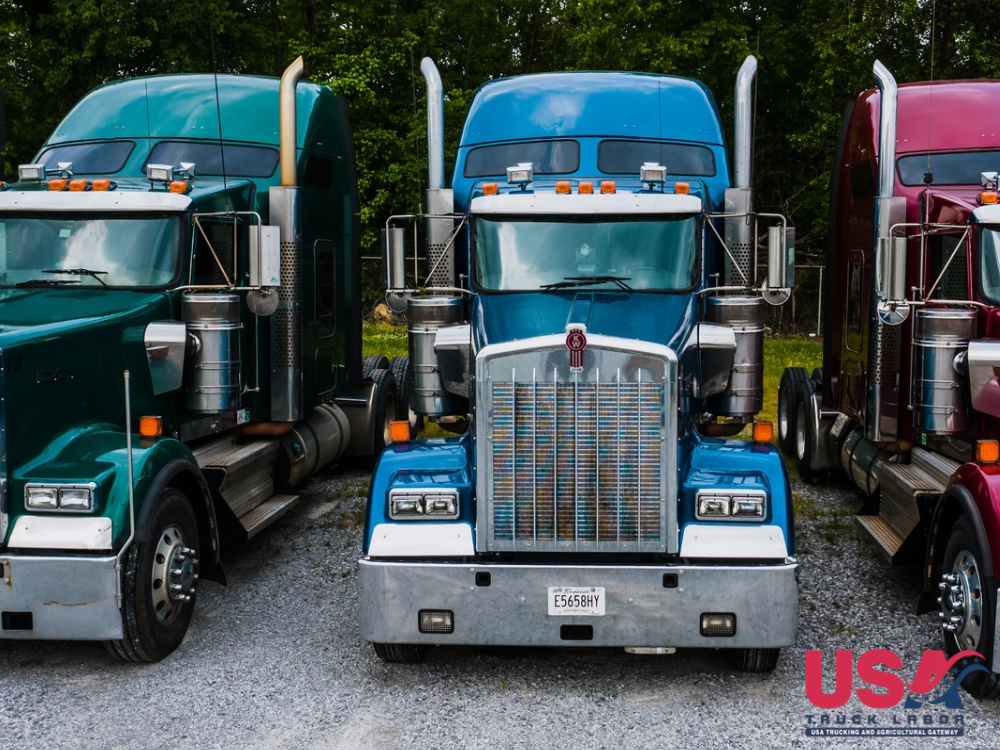
Types of H-2A jobs available with a CDL
There are many types of H-2A jobs available to you if you have a CDL. In the H-2A Program, a CDL coupled with equipment operating skills makes you a versatile candidate for jobs. Some of the different types of H-2A farm jobs available with a CDL include:
Ag equipment transport
Grain/harvest truck driver
Custom harvesting equipment transport
Water truck driver
Livestock transport
Agricultural supply and fertilizer transport
Depending on the type of farm or ag business, there are many different types of jobs you might perform for an H-2A employer. The duties you can perform in an H-2A job must be disclosed in the Job Order, which you have access to before accepting an H-2A job offer. Not all truck driving duties require a CDL, but having a CDL makes you a versatile and coveted seasonal H-2A employee.
USA Truck Labor’s training program prepares you to earn a CDL in America
To earn a CDL in America, you must first pass Entry Level Driver Training (ELDT), pass a skills test, and meet Department of Transportation (DOT) medical requirements.
USA Truck Labor prepares candidates to excel at ELDT by helping you understand basic safety, laws and rules of the road, basic terminology, and practice the skills needed to pass training and earn a CDL.
Ready to supercharge your H-2A career?