American Farm Measurements Explained
Understanding and communicating with your H-2A employer is critical to your success as a farmworker in America. It’s hard to perform at a high level in your farm job if you don’t know what your employer is asking you to do. The differences between farming in South Africa and America mostly come down to units of measurement, language, and culture.
In a previous blog, we discussed some of the most important American farm terms that every H-2A worker should know. Today, we’re taking it a step further and breaking down American farm measurements every H-2A worker should understand.
Importance of understanding measurements
Understanding American farm measurements will put you in a position to succeed with an H-2A employer from the start. South Africa uses the metric system, but America does not.
The amount of time it takes to explain measurements can’t be replaced. Employers will expect you to know terms, measurements, and phrases from the first day of work. Here are a few reasons that understanding U.S. farm measurements is critical to your success and your employer’s operation:
You can easily follow instructions from supervisors
You will be able to operate farm equipment safely
Measurements are vital to understanding road signs and speed limits
You will be able to better understand weather conditions
You can communicate more effectively with American farmers
You will avoid costly mistakes caused by misunderstanding measurements
Having a thorough understanding of common measurements and what they mean on the farm will save your employer time and money, creating more value for you as a worker.
Here are some of the most common American farm measurements explained.
Read more about what American employers expect during your first 30 days on the job
Acres: land measurements
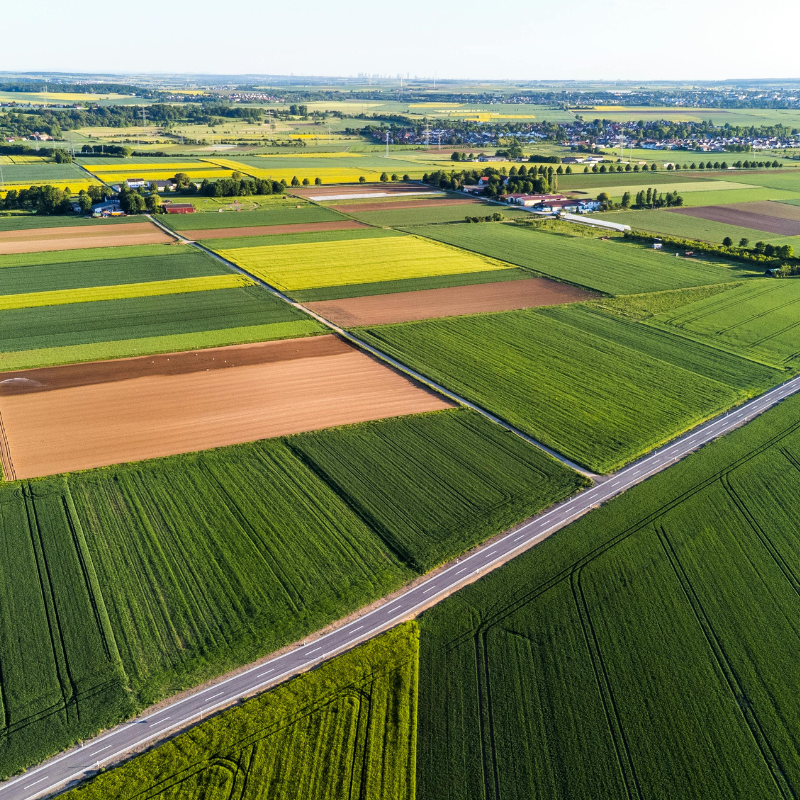
American farms measure land in acres, whereas in South Africa, we measure land in hectares. A hectare is not as large as an acre:
1 acre = .405 hectares
1 hectare = 2.47 acres
Although you don’t have to calculate acres yourself as an H-2A worker, you will need to understand the amount of land being discussed when an employer uses the term acre.
Miles: distance measurements
Americans use miles to measure distance, not kilometers. Understanding distance is critical to your success as a farmworker in America. Here’s the conversion from miles to kilometers:
1 mile = 1.61 kilometers
1 kilometer = ~.62 miles
Some instances when you’ll hear miles used to measure distance are:
Driving between fields
Driving to another farm or another farm location
Delivering grain
Traveling to a nearby town
Miles per hour: speed, time, and distance measurements
If we’re discussing miles as a measurement of distance, then we must include miles per hour (MPH), the American measurement for speed, time, and distance. American vehicles measure speed in miles per hour, not kilometers per hour.
Example:
50 miles per hour = 80 kilometers per hour
American speed limit signs are listed in miles per hour, so this is one of the most important measurements H-2A workers need to know for safety and legal purposes.
Gallons: liquid quantity measurements
One of the biggest differences in measurements between South Africa and America is gallons rather than liters for measuring liquids and other fluids.
1 gallon = 3.785 liters
You’re going to encounter gallons when you discuss:
Gas/petrol
Diesel fuel
Hydraulic fluid
Fertilizer
Gallons are also broken down into smaller measurements known as quarts:
1 quart = ¼ of a gallon
4 quarts = 1 gallon
Gallons per acre: understanding application rates
One of the ways farms use gallons as a measurement in daily use is application rates of things like fertilizer or pesticides. Farmers will ask you to apply a certain number of gallons per acre, so it’s critical to understand both measurements—gallons and acres.
For example, equipment operators might be asked to apply 15 gallons of fertilizer per acre.
Learn more about different types of farm jobs in America
Feet and inches: distance and size measurements
In South Africa, we measure distance and size in centimeters and meters. In America, they use feet and inches to measure size and distance. This is one of the biggest differences between farming in America and farming in South Africa.
1 inch = 2.54 cm
12 inches = 1 foot (ft.) = 30.5 cm
Putting these measurements together, we can see what an acre looks like:
1 acre = 200 ft. x 200 ft.
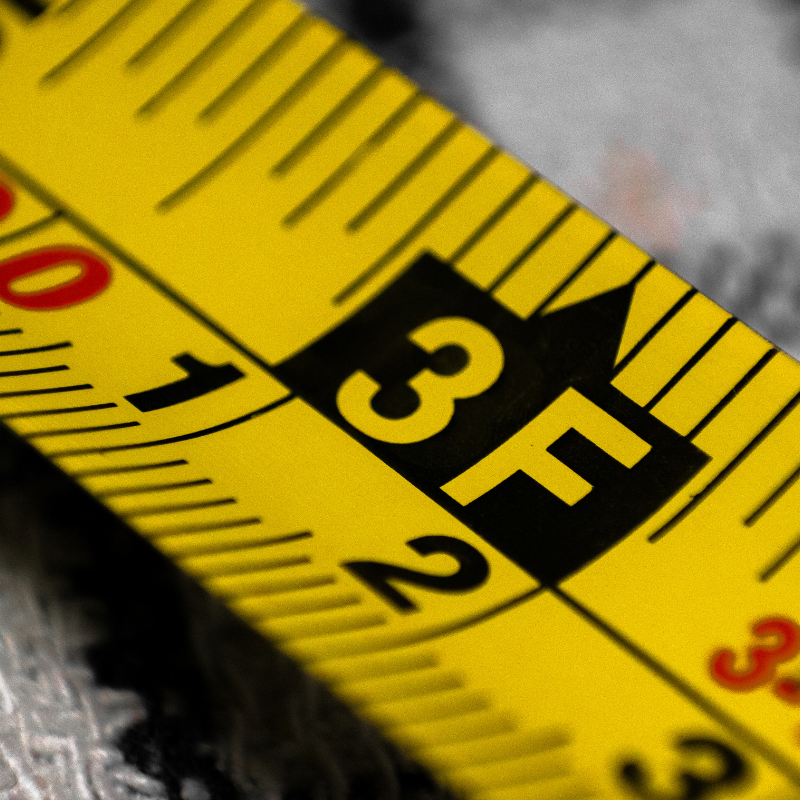
Rulers, tape measures, and other measuring tools in America use feet and inches. If you’re asked to maintain a building or plant a field, it’s critical to understand these measurements. For example, a farmer might ask you to plant corn seeds every 6 inches. You’ll need to be able to comprehend that measurement and calibrate the equipment to follow these directions.
Pounds: weight measurements
Instead of weighing items in grams or kilograms, American farms measure in pounds (lbs).
1 pound (lb) = .454 kilograms (kg)
1 kilogram = 2.205 pounds/lbs.
You may hear pounds when discussing farm items such as:
Livestock: the cow weighs 950 pounds (lbs)
Equipment: it’s a 4,000-pound tractor
Seed and fertilizer: go to the shop and get a 50-pound bag of seed
Tons: American tons are different
You should also know how pounds relate to tons in America. Understanding American tons is critical for H-2A workers in America. Vehicles, equipment, and truckloads are generally measured in tons. American tons are different from metric tons in South Africa.
1 U.S. ton = 2,000 pounds (lbs) = 907 kilograms = .907 metric tons
Bushels
If you’re working on an American farm, you’re almost guaranteed to hear the term “bushels” at some point or another. While bushels aren’t an official measurement in America, they’re commonly used to measure crops and grains on farms.
For example, you might hear a bushel of corn or a bushel of wheat. Bushels refer to dry measurements.
1 bushel = ~32 dry quarts (remember a quart is a quarter of a gallon)
Fahrenheit: measuring temperature
We use Celsius to measure temperature, while Americans use Fahrenheit to measure temperature. This is another one of the biggest differences between our two countries, and as a farmworker, it’s critical to understand how to measure temperature in American Fahrenheit units.
Here are some of the most common conversions:
32°F = 0°C
50°F = 10°C
68°F = 20°C
77°F = 25°C
86°F = 30°C
95°F = 35°C
Formula for converting Celsius to Fahrenheit: °C = (°F − 32) × 5/9
Understanding temperature matters for:
Working conditions and weather
Crops and crop health
Heat safety
Frost
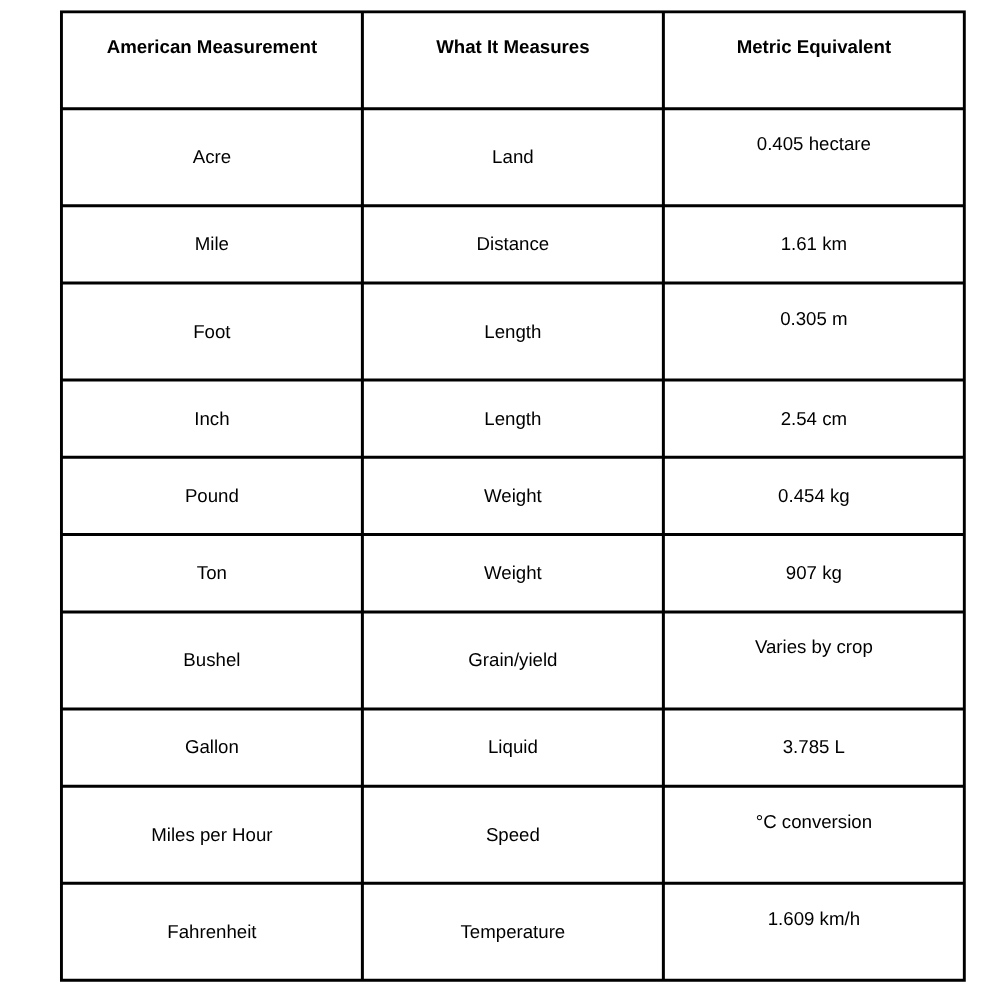
To help you put everything together with American farm measurements, we’ve included a helpful table below:
American farm measurement table
USA Truck Labor is dedicated to preparing you for farm work in America
Understanding your measurements and what they mean is a vital step in your career. Our comprehensive truck training program prepares South Africans for a career in American agriculture, but one of the best ways to build your value as a worker is to become a student of American farming. Knowing the difference between a pound and a kilogram, an acre and a hectare, or a mile and a kilometer will make the transition to working on an American farm easier and smoother.
Build your knowledge and increase your skills with our training program. Book a call online now to learn more and secure your training spot.