Basic Farm Truck Maintenance Every H-2A Driver Should Know
Farm truck maintenance is vital to keeping a farm season on schedule and running smoothly. Farm trucks are exposed to harsh rains, dusty environments, extreme temperatures, and some of the most adverse weather imaginable. H-2A farm drivers must understand basic maintenance procedures to avoid costly breakdowns and to build their value as a driver.
Even the most reliable trucks depend on operators who can quickly identify basic maintenance issues and work to correct those problems before they cost American farm employers precious time and money. We’ve already discussed the importance of pre-trip inspections, but maintenance takes that procedure one step further to keep the truck on the road by performing preventative tasks. Today’s blog breaks down some of the most basic farm truck maintenance every H-2A farm driver should know.
Importance of understanding your farm truck
Before you can maintain the various systems of a semi-truck, you must first understand the vehicle. It’s critical to know where to find essential truck systems, how to check to see if they’re working properly, and how to perform basic maintenance when those systems require your attention. From there, H-2A truck drivers should understand:
Pre- and post-trip inspection procedures.
How to find and identify vital truck components and systems.
How to distinguish when a truck needs simple maintenance or major repairs.
Once you can identify basic maintenance needs, you’ll also need to be able to perform simple maintenance tasks on your truck to keep it running efficiently.
The difference between maintenance and repairs
An H-2A truck driver must understand the difference between simple maintenance and major repairs.
To help, here’s an example: you check the tires of the truck, and they need air. Adding air to the tires is a maintenance task because the tires need air to keep the truck safely running on the road. On the other hand, you check the brakes and notice a broken brake line. Replacing the brake line is a repair task that an H-2A driver probably isn’t trained to perform unless otherwise stipulated, and the brake line must be repaired before the truck can be driven.
A good way to think about the difference between maintenance and repairs is that maintenance prevents problems from causing a breakdown, while repair work is needed to fix a problem so the truck is roadworthy again.
Maintenance schedules vary based on factors such as:
Mileage: Maintenance schedules vary based on a truck’s mileage. For example, some maintenance tasks need to be performed every 5,000 – 10,000 miles while others need to be performed every 10,000 – 25,000 miles.
Type of driving: Operating a truck in a city environment requires a different maintenance schedule from a long-haul, over-the-road truck, which differs from a farm truck. Environments and the types of driving will dictate maintenance schedules and recommended timelines.
Seasons/weather: Regularly exposing the truck to extreme temperatures and various weather such as rain, snow, and dust storms will require a different maintenance schedule from trucks that aren’t regularly operated in these conditions. Driving in North Dakota in January is much different from driving in Alabama in August.
Always check the owner’s manual for maintenance schedules, recommended maintenance mileages, and parts specifications. Never assume that truck parts and fluids are universal. Here are some of the basic maintenance tasks that H-2A truck drivers may be asked to perform.
Checking and changing fluids
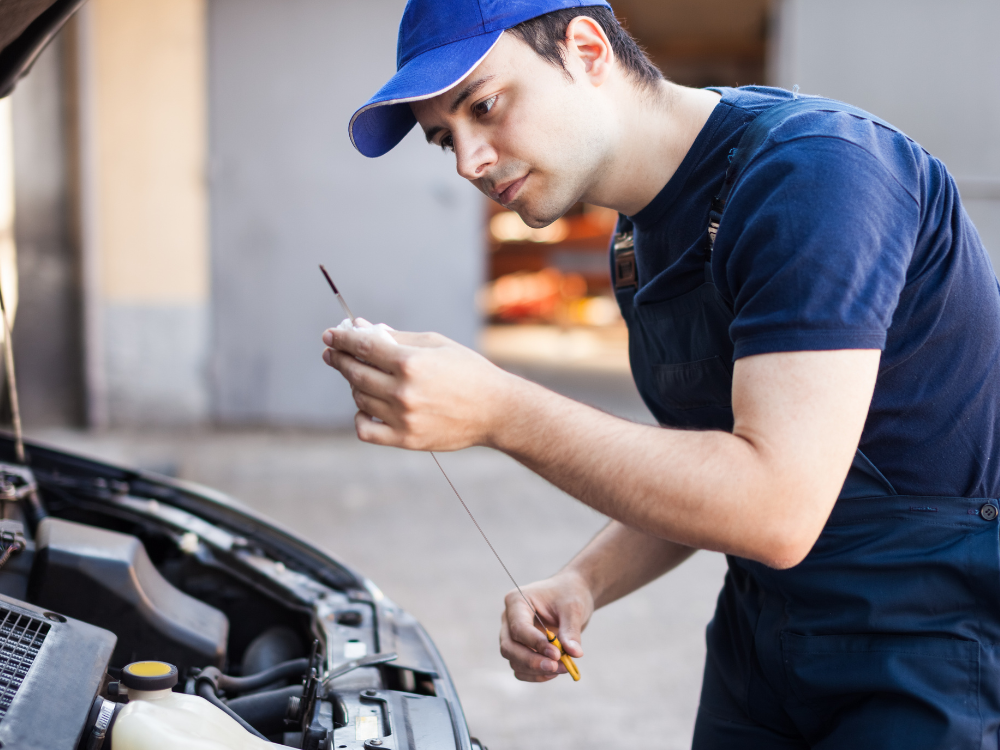
Checking fluids such as coolant and oil is one of the most basic farm truck maintenance tasks you’ll be asked to perform. Checking fluids is also part of the pre-trip inspection, but you’ll also need to know how to perform routine oil changes and add essential fluids such as:
Coolant
Windshield washer fluid
Power steering fluid
Brake fluid
Differential fluid
Transmission fluid
You’ll need to check fluid levels and top off reservoirs as needed. Fluid checks are performed during the daily pre-trip inspections and should be filled as needed. H-2A drivers must understand how to check fluids and know which types of fluids to add.
Tires (pressure, rotation)
Regularly checking your tires is another maintenance task that also falls under the pre-trip inspection category, but is critical nonetheless. Again, check the owner’s manual to ensure tire pressure is accurate. From there, regularly inspect tires using the ABC method to look for:
Abrasions
Bulges
Cuts
Use the ABC method to check the truck’s tires for abrasions, bulges, or cuts to ensure everything is safe for hauling and travel. H-2A drivers may also be asked to perform tire rotations as part of regular truck maintenance. Tires are typically rotated diagonally, meaning, for example, the front passenger-side tire is rotated to the rear driver’s side and likewise.
Air filters
Trucks have two primary air filters: an engine air filter and a cabin air filter. The cabin air filter cleans the air entering the truck’s cabin. The engine air filter cleans the air moving to the engine. An engine’s air filter is vital to a truck’s gas economy, horsepower, torque, and overall performance. Semi-trucks use one of two types of engine air filters:
Wet filters: A wet air filter is preferred for particularly dry or dusty environments with many small particles in the air. Wet filters are lubricated with oil to help trap and contain small dust particles. These filters require more maintenance than other types because they need to be cleaned and lubricated more often.
Dry filters: Dry air filters are the most common type of air filter, typically made of paper or synthetic material to trap and contain airborne particles. Dry filters tend to be simple to replace by disposing of the old one and simply inserting a new filter.
The type of air filter a truck uses will be specified in the owner’s manual. It’s common for farm trucks to use a wet air filter based on the dusty, muddy, harsh environments they drive in, such as dirt roads and crop fields.
Grease the Fifth Wheel
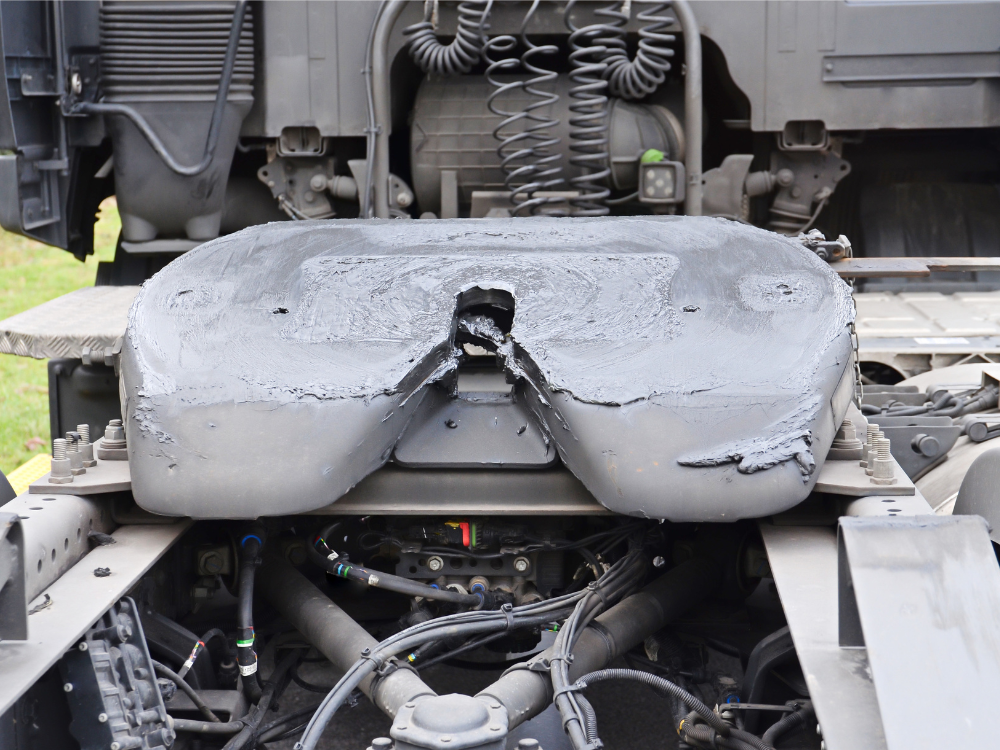
The fifth wheel of a truck is the coupling plate attached to the rear of the truck’s frame, just above the rear axle. The fifth wheel coupling connects trailers for hauling and towing. Trailers connect to the fifth wheel with the kingpin, a large protruding pin coming from the underside of the front of the trailer. The fifth wheel must be greased to:
Prevent friction between the truck and the trailer.
Allow for easy movement and smooth turning with a trailer connected.
Prevent binding or stiffness between the truck and trailer.
Protect the truck’s and trailer’s parts and prevent rust or corrosion.
Most fifth wheels need to be greased every 10,000 – 15,000 miles to prevent wear and tear on the truck and trailer, but these recommendations can vary based on the type of truck and driving environments. For example, dirtier, dustier environments may require more frequent fifth wheel greasing.
Battery load test
A battery load test checks the battery’s ability to handle electrical demand under stressful conditions. The test is designed to help operators discover that a battery is failing before it leaves you stranded on the side of the road. Battery load tests require a special tool that connects to the truck’s battery and places a load on the battery similar to what’s needed to start the truck. If the voltage drops too far, the battery is likely failing or weak and should be replaced soon.
Truck maintenance tips for new H-2A drivers
It’s important to remember that H-2A drivers are not expected to be mechanics. Mechanics on the H-2A program are specialized positions. The key takeaway here is that H-2A drivers will be expected to maintain trucks by performing routine maintenance tasks. Here are a few tips to help you keep up with truck maintenance as an H-2A driver:
Pay attention to warning lights: Warning lights on the dashboard signal something is wrong and shouldn’t be ignored. Pay close attention to things like check engine lights, oil lights, and other warning lights, and be sure to report any malfunctions immediately.
Keep the truck clean: Keeping the truck free of dust and debris is one of the best ways to maintain the truck. Remove any mud, dirt, or debris from key areas of the truck such as the fifth wheel connection.
Listen to the truck: One of the best ways to know whether an area of the truck needs attention is to listen carefully to the truck while it’s running or operating. Listen to the brakes, listen to the engine as it revs, listen to the gears as you shift, and try to pick up on abnormal noises such as grinding, clicking, or squeaking.
Follow schedules and procedures: Always consult the owner’s manual for important specifications and be sure to follow your employer’s preferred maintenance schedules and procedures. Never assume you understand a schedule or a procedure, and always ask for clarification from your employer if needed.
Read more about what American farm employers expect during your first 30 days
USA Truck Labor offers a full training program
USA Truck Labor’s training programs are designed to teach you more than just how to drive a truck. We cover essential practical techniques such as pre- and post-trip inspections and connecting and disconnecting trailers so you’re a valuable asset to an employer, not just a warm body to drive a truck.
Our program is designed to prepare you for the full H-2A driving experience.
Book a call online now to learn more about our program and to secure your training session spot.