Communication is an important aspect of working on an American farm. Radio communication across teams, across locations, fields, and convoys is critical for efficient farm operations.
Knowing how to communicate from the start will make you a valuable employee, and your employer will see you as an important team member. Simply put, you must understand how to communicate over the radio on an American farm. Today’s blog covers American farm communication, radio etiquette tips, and common terms to help H-2A job candidates prepare to succeed on an American farm.
Importance of communication on an American farm
Communication is vital on an American farm. You need to know locations, tasks, and plans across your teams. For South African H-2A workers, it can take some time to fully grasp American farm radio communication etiquette. Still, properly communicating over the radio helps farm teams to:
Stay aligned: Knowing where your teammates are and what they’re doing helps ensure everyone is on the same page.
Stay safe: Communicating effectively helps you stay safe, know where equipment is, and understand your role in a task or project.
Improve efficiency: Effective communication helps teams stay on task and be efficient.
Learn more about American farm measurements
Understanding 2-way radios
2-way radios are essential for most farm operations. 2-way radios ensure clear, consistent communication. Farms use 2-way radios instead of relying on cell phones for a few reasons:
Most farms are extremely rural and don’t have reliable cell service
2-way radios allow teams to stay connected across locations still in proximity to one another
2-way radios are a fast way to reliably communicate
2-way radios are a one-time purchase instead of ongoing phone plans
There are a few different types of 2-way radios that you’ll come across on an American farm. The most common types of 2-way radios are:
Handheld two-way radios
Vehicle-mounted radios
CB radios (particularly in heavy farm trucking environments)
Basic radio communication etiquette
Understanding radio communication etiquette is essential in your farm job. American employers can be particular about how and when you communicate over the radio. Here are some of the most basic radio communication etiquette rules:
Listen before speaking
Make sure someone else isn't already communicating or talking
Avoid interrupting an active conversation
Identify yourself
Know your assigned radio name or call sign
Address the person you need to reach before giving your message
Keep messages short and clear
Avoid unnecessary conversation
Communicate one message at a time
Speak slowly enough to be understood
Wait for a response
Give the other person time to respond
Don't assume your message was received
Use professional language
Avoid slang, inappropriate jokes, or unnecessary chatter
Keep conversations work-related
Confirm important instructions
Repeat directions when necessary
Confirm locations, quantities, and instructions before acting
Keep safety communications a priority
Don't tie up the radio with unnecessary conversations
Immediately communicate hazards, breakdowns, or emergencies using the farm's established procedures
While this is not a full list of radio etiquette, practicing these basic “unspoken” rules will benefit you in the long run.
Check out 10 American farm terms every H-2A worker should know
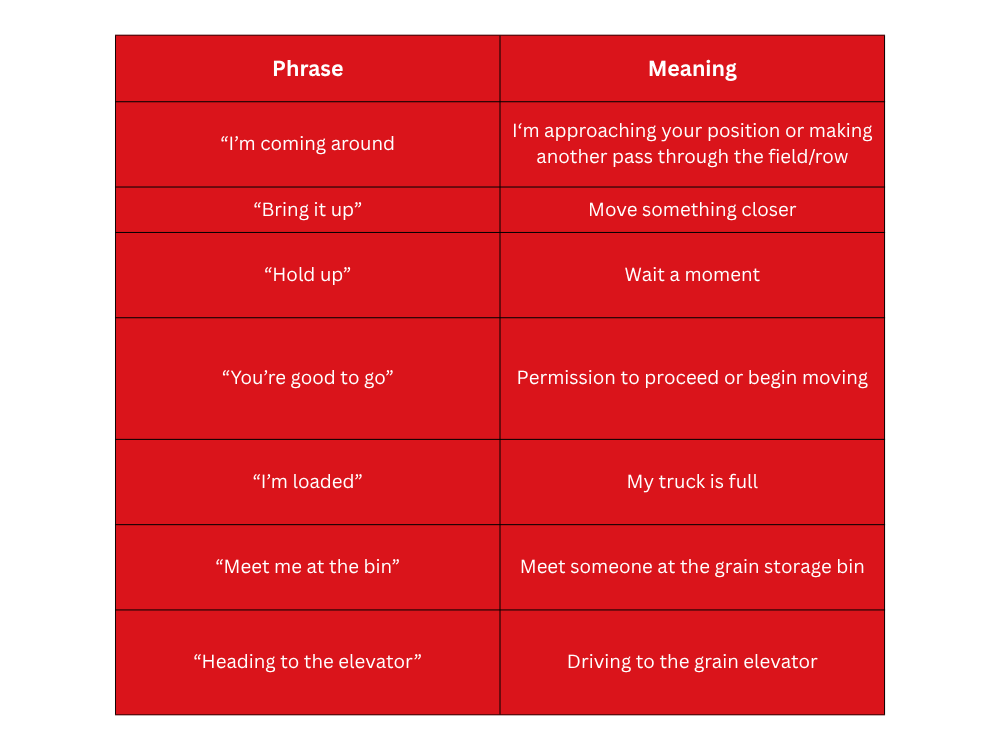
Common farm radio terms
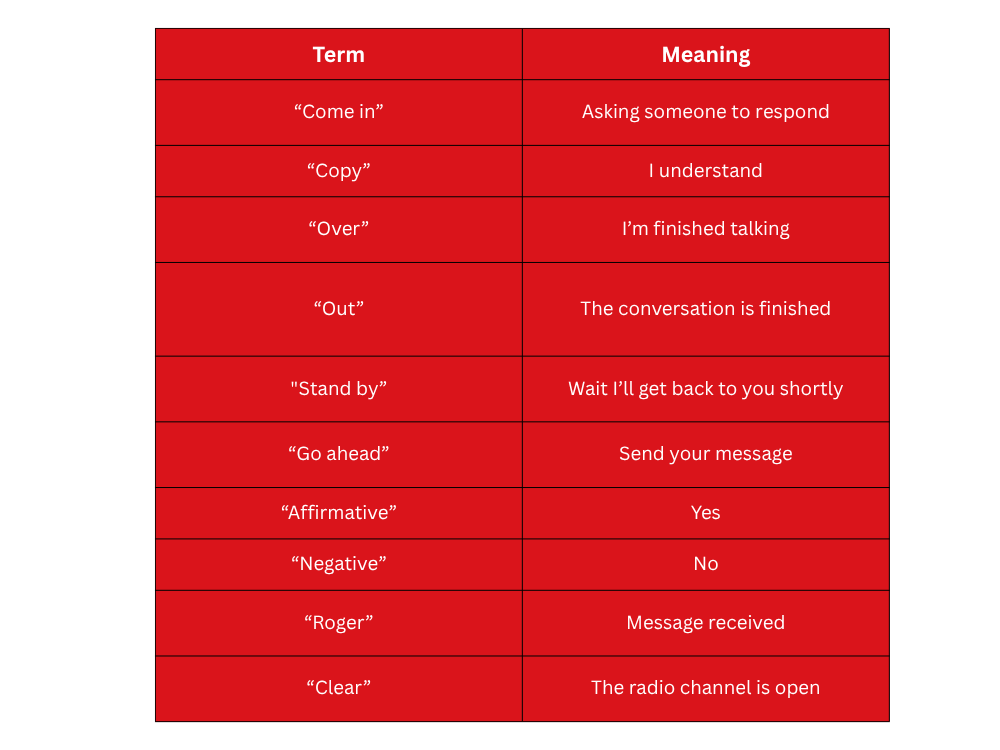
Common farm radio phrases and sayings
USA Truck Labor helps build your American farm driving skills
Communication on a farm is critical for safety, productivity, and efficiency. At USA Truck Labor, we understand what it takes to be successful in your American farm job. Our farm truck driving training program is designed specifically to put you in the best position to succeed in your career in American ag.
Contact our team today to book your spot and land that opportunity in 2027.