Importance of Defensive Driving on Farms
Farms present unique driving challenges. You’ll have to navigate fields, equipment, buildings, fences, pastures, people, and other vehicles coming and going. Yes, driving safety hazards are everywhere on a farm. This is where a defensive driving mindset comes into play. Defensive driving isn’t just for highways and local roads. In fact, defensive driving skills might be even more important in a farm or ag environment.
Today’s blog breaks down the ways defensive driving matters on farms and how it protects critical components such as buildings, livestock, people, and crops.
Farms are constantly changing, ever-evolving work environments
Farm environments can change dramatically one minute to the next due to:
Changing weather
Vehicles coming and going
Livestock moving around
Various crop activities like harvest or spraying
Mud, dust, and poor visibility
Temporary roads and uneven terrain
Equipment moves between fields, weather changes rapidly, and unexpected obstacles creep up, creating hazardous driving environments on farms. Farm truck drivers must have keen awareness and be ready to navigate hazards at any time.
Slow-moving farm equipment creates unique hazards
Driving in and around farm environments presents unique hazards, but large, bulky, slow-moving farm equipment is a unique hazard that other types of truck drivers don’t really have to consider. Farm truck drivers aren’t just driving on the farm, but also on the roadways in and around the farm. Pastures and crop fields are sometimes separated by miles of roadway, and drivers will need to prepare for driving in those environments with other farm traffic. Expect tractors and combines to travel well below normal highway speeds. Drivers must also be aware of:
Wide tractor implements such as sprayers or planters extending into adjacent lanes
Safe passing and cruising practices
Maintaining proper following distance, especially behind equipment or other farm trucks
Smaller vehicles crossing between fields and pastures
Learn more about the importance of building a professional H-2A reputation
More people means more unpredictability
Certain times of the year on a farm bring more people and, as a result, more driving hazards. You’ll find different types of people on a farm at any given time. Harvest in particular tends to bring more people onto the farm, such as:
Seasonal H-2A harvest workers
Contractors and delivery drivers
Family members and visitors
Agri-tourists (visitors to see a farm for fun)
Defensive driving leads to efficient farm operations
Practicing defensive driving techniques does more than protect people, equipment, or farm assets. Safe, defensive driving also leads to efficient farm operations by:
Preventing costly equipment damage
Reducing downtime during critical planting and harvest windows
Lowering repair and insurance costs
Farm truck driving can be grueling, demanding work, especially during certain times of the year such as harvest or planting season. American ag employers want the safest, most dependable, efficient workers to drive their farm trucks.
Defensive driving habits every farm worker should practice
Being aware of the many hazards present while driving in a farm environment is the first step to being a safe farm truck driver. One of the main goals of USA Truck Labor’s training program is to produce safe, aware farm truck drivers. Some of the safe, defensive driving habits you can develop now include:
Performing pre-trip inspections
Driving at safe speeds for conditions
Eliminating distractions and honing your focus behind the wheel
Keeping your truck visible and using proper lighting features (running lights)
Keeping plenty of following distance behind other vehicles
Always expecting the unexpected
USA Truck Labor focuses on safe driving techniques
USA Truck Labor’s 2-day and 4-day training programs are designed with farm environments in mind. Safety and defensive driving are major aspects of our training courses. Training teaches you to:
Conduct pre- and post-trip inspections
Identify hazards on the road and with equipment
Safely couple and decouple trailers
Maneuver in tight, farm environments
Drive across various types of terrain (dirt, gravel, pavement)
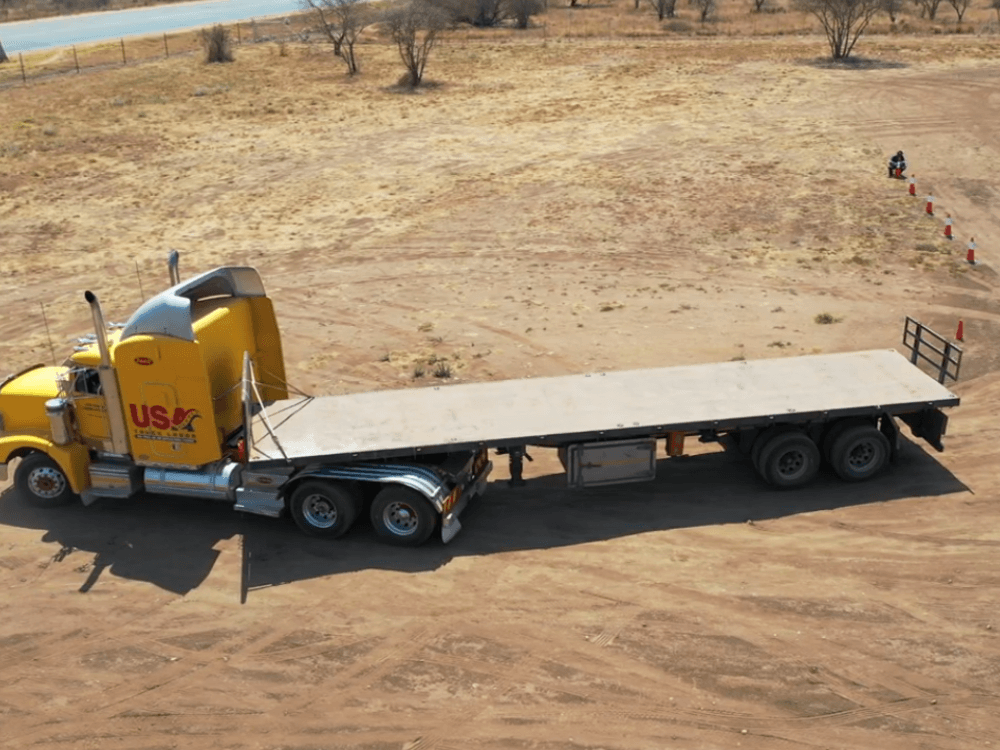
You’ll drive the same type of truck commonly found on American farms and ag businesses. If you’re hoping for a farm job for the 2027 season, then now is the time to book your truck training.
Book a call online with our resident training director, Jandre, to learn more about training and to secure your spot.