Different Types of Harvesting Equipment Used by H-2A Workers
Harvest time is the most critical, busiest time of the growing season for farmers. Seasonal H-2A workers often operate or work alongside a variety of harvesting equipment depending on the crop. Understanding the purpose of each piece of equipment will help you prepare for the job by clarifying the required skills and proper safety techniques. Different farms use different types of harvest equipment based on the types of crops and the number of acres being harvested.
This blog breaks down the different types of harvesting equipment used for various crops and commodities by H-2A workers in America.
Importance of understanding harvesting equipment
Harvest time means the entire growing season is on the line, and one small mistake during harvest can cost farmers their whole season’s profits. H-2A employers are going to expect their seasonal H-2A workers to have a basic understanding of harvest principles, the importance of crop yields, and the types of equipment used to get crops and commodities out of the ground and to market.
First-time H-2A candidates need at least a simple understanding of harvesting equipment and the types of machines used for various types of crops. Harvest time in America brings a high demand for skilled H-2A workers to operate equipment, drive trucks, and help U.S. farmers complete a successful, profitable growing season.
Grain harvesting equipment
If you work in a skilled role on an H-2A visa, chances are you’ll work on some type of grain farm. Types of grains include:
Corn
Wheat
Barley
Soybeans
Oats
Harvesting grains is a labor- and time-intensive chore. Grains need to be reaped, threshed, and cleaned before being hauled to storage or grain elevators. Here are the types of harvest equipment involved:
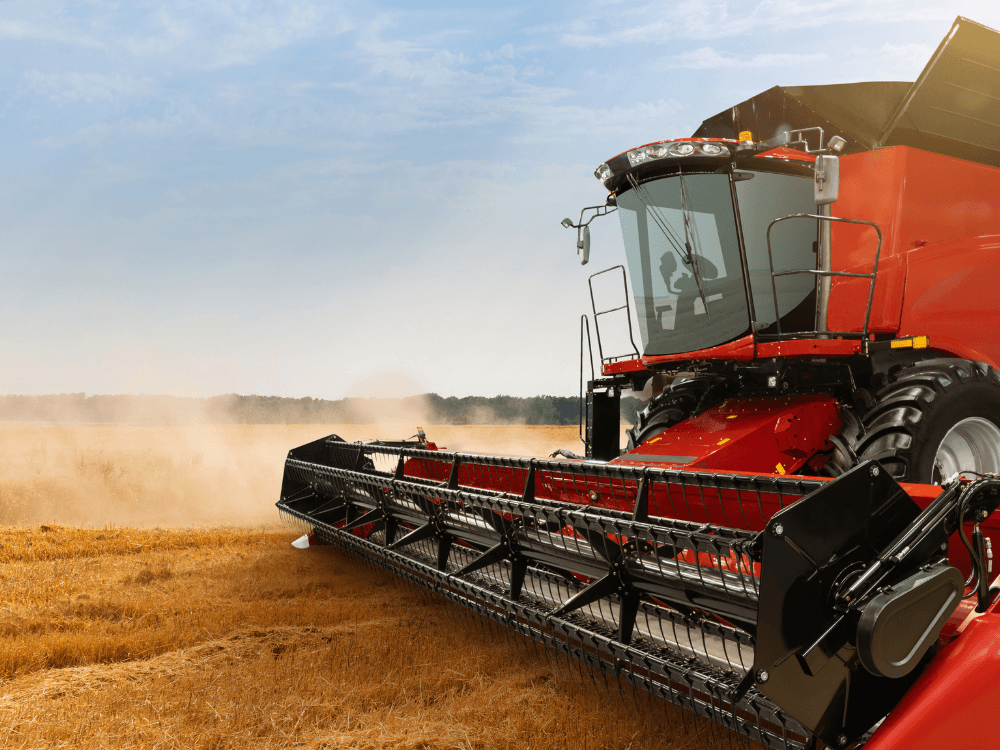
Combines: Combine harvesters are named because they “combine” several harvest tasks such as reaping, threshing, and cleaning into one piece of farm equipment. Combines are one of the most common types of farm equipment that H-2A workers will use.
Grain carts: Grain carts are large bins attached behind a tractor and are used to collect the harvested grains from the combines and transport those grains to trucks waiting at the edges of the fields. Grain carts allow combines to keep harvesting without stopping to unload the grains into trucks. Efficient harvest operations have grain carts rotating so once one is full, another grain cart comes alongside the combine to keep collecting harvested grains, thus combines don’t have to stop harvesting between cartloads.
Grain trucks: Grain carts haul the harvested grains from the combines in the fields to trucks waiting at the edges of the fields. Grain trucks collect the grains from the carts and, once full, haul the loads over the road to storage facilities known as grain elevators. Efficient harvest operations rotate grain trucks and grain carts so combines don’t have to stop harvesting.
Learn more about GPS and technology used on American farms
Fruit and produce harvesting equipment
In recent years, the American ag industry has seen a shift in how fruits and produce are harvested. Fruit and produce harvesting used to be performed primarily by hand, also called “picking.” Although many fruit and produce farms still rely heavily on hand-picking harvest techniques, mechanization has brought some innovative new equipment to the industry. Let’s take a quick look at different mechanical harvesters for fruits and produce.
Different types of mechanical fruit and vegetable harvesters
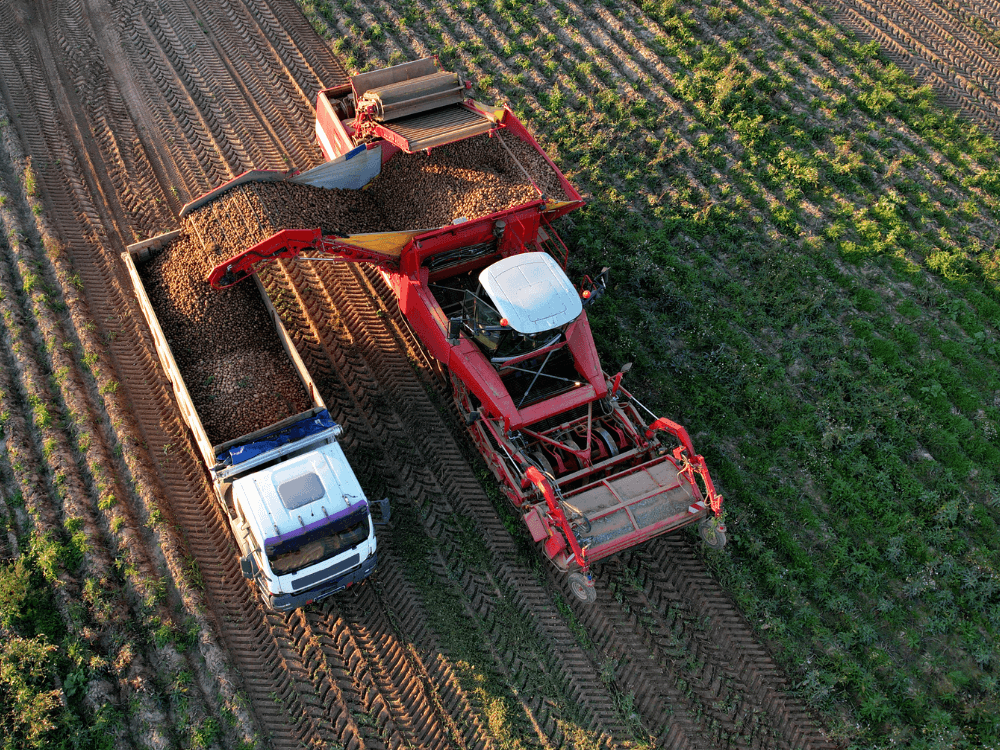
Potato harvesters: Specialized machines designed to pull potatoes out of the dirt while minimizing damage. Potato harvesters typically feature conveyor belts and vibrating screens to dig up the potatoes and shake the dirt loose from them before dropping the potatoes into bins. Similar types of equipment are used on other ground/dirt vegetables such as carrots and onions.
Orchard platforms: Forklift- or telehandler-style machines with large platforms that raise workers to the tree canopies and carry workers from tree to tree to pick fruits in densely populated orchards. Platforms allow greater mobility and reduce harvest times by eliminating the need for ladders, essentially speeding up the time it takes to harvest certain types of orchard fruits such as apples, pears, and oranges.
Cherry shakers: Cherry shakers are harvest equipment that work by clamping onto the trunk of a cherry tree with a claw-like tool, shaking or vibrating trees to break ripe cherries loose, and then use a net system to catch the fruits before they hit the ground.
Grape harvesters: Similar to cherry shakers, grape harvesters work by driving over a row of grapevines, vibrating the vines to shake the ripe grapes loose, and using conveyor belts to collect the loose, harvested grapes into the self-contained grape harvester bins.
100 years ago, all of these harvest tasks were labor-intensive tasks completed by hand. Today, mechanization has eliminated the need for large hand-picking crews, at least in some operations. Not all American fruit and produce farms have adopted these machines for harvest, but it’s only a matter of time before these machines are the standard.
At USA Truck Labor, we expect mechanization to create higher demand for skilled H-2A workers capable of using new pieces of fruit and produce harvest equipment as well as maintaining and repairing that equipment. As more and more American fruit and vegetable farmers adopt new harvest technology, the need for labor-intensive hand pickers will decrease while the demand for high-skilled seasonal harvest labor will only increase, essentially creating new H-2A opportunities for skilled South Africans to work in America.
Read more about different types of farm jobs in America
Cotton harvesting equipment
Cotton is another crop that is harvested much differently today than it was a century ago. Before technological advancements, cotton had to be picked primarily by hand. This was inefficient on many levels, but mostly because hand-picking cotton is extremely labor-intensive and time-consuming. Hand-picking also risks loss of crop and presents challenges for transporting the harvested cotton to gins. Today, there are two different types of cotton harvesting equipment:
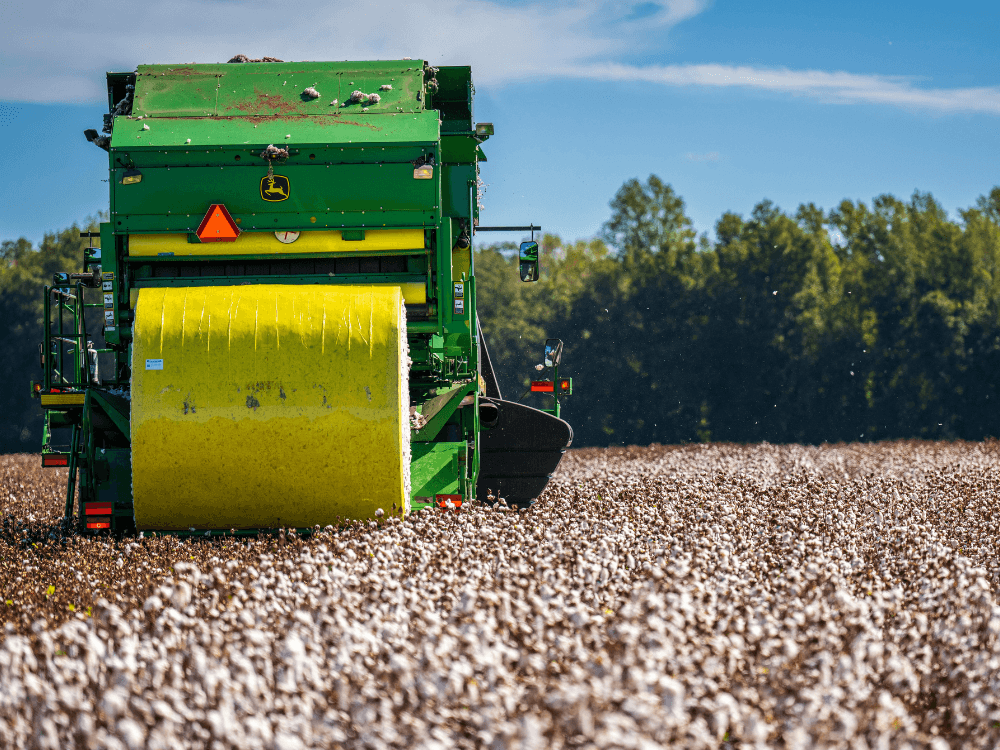
Cotton pickers: Use rotating spindles to remove the cotton from the burrs and wrap it around moistened spindles before it's removed by another specialized machine called a doffer.
Cotton strippers: Use a roller equipped with bats and brushes to pull the cotton along with the leaves and stems onto conveyor belts, which then need to be cleaned later at the gin.
Hay and forage (silage) harvesting equipment
Although hay and forage isn’t exactly a crop that needs to be harvested, it’s common for seasonal farmworkers to operate equipment designed to cut and bale hay or chop forage such as:
Mowers and swathers: Used for cutting long grass to make hay. Mowers and swathers cut the growth and leave it to dry in the fields to be collected later to either make hay or silage.
Hay balers: Tractor implements designed to collect, compress, and wrap cut hay into bales. Balers are generally towed behind a tractor and can be small attachments or large commercial units. Hay is often sold or used for livestock feed.
Forage harvesters: Attachments or implements designed to cut, chop, and collect corn stalks, alfalfa, and grass. Forage harvesters cut the growth into small uniform pieces and collect them in a bin as they move through the fields. The material is then stored and fermented into nutrient-dense livestock feed, also called silage.
Get a head start with harvesting equipment at USA Truck Labor
American farms are beginning to harvest now. American agriculture employers want to see that you can perform the duties of their jobs before hiring or interviewing you.
At USA Truck Labor, we design our training programs around practical techniques so you are in the best position to land a job and succeed when you get to America. Our truck training involves common harvest techniques such as driving across different terrains, backing, pre- and post-trip inspections, and coupling and decoupling the trailer.
If you’re struggling to land an H-2A job and need some experience to bolster your resume, our program is perfect for you.
Contact our team today to learn more or book a call online to speak with our program director, Jandre Eksteen, and secure your training spot now.