Grain Elevators Explained: What H-2A Truck Drivers Need to Know
Grain elevators are vital to American agriculture. In South Africa, we call these grain silos or just silos. In American farming, grain elevators are essentially where farmers store their grain for market. Grain elevators are tall industrial facilities used to receive, test, dry, store, and distribute bulk grains like wheat, corn, oats, and soybeans. Grain elevators serve as vital connection points between farmers and global food producers or food export networks, and you can expect to work around these in your H-2A jobs.
One of the most important tasks for H-2A truck drivers is hauling crops to the grain elevators, so it’s vital to understand how they work and what to expect. To help, today’s blog post explains grain elevators in depth and covers what H-2A truck drivers need to know before traveling to the United States for an H-2A farm job.
Importance of grain elevators
The importance of grain elevators to the agricultural community can’t be overstated. Grain elevators are critical for:
Freeing up space on farms: Farms need to use their land and space for growing crops or raising livestock, not for storing and protecting harvested grain.
Quality control: Grain elevators ensure only quality products are stored through testing.
Market timing: Storing grains safely allows farmers to maximize the price they receive for their products, instead of being forced to sell harvested crops right away.
How a grain elevator works
Working as an H-2A driver means you’ll probably visit a grain elevator several times throughout your farm season. To help you prepare, here’s how a grain elevator works in America:
Arrival, weighing, and testing: Trucks loaded with harvested grains arrive, get weighed, and go through grain testing for things like moisture, pests/bugs, mycotoxins, and the presence of fungi before being allowed to unload.
Unloading pit: The unloading pit or designated dumping area will be visibly marked, and you will typically be directed when it’s your turn to unload.
The buckets: Grain elevator buckets, sometimes called “legs,” transfer the grain from the unloading pit to storage silos or processing areas, and likewise, buckets can be used to load grain back into the trucks (see image below).
Storage and distribution: Grains are recorded and stored until needed or sold. Once grains are sold or needed, drivers return to the elevator to pick up grains or the grains are transferred into railcars to be delivered by train.
Weighing: Many grain elevators weigh your farm truck on the way out to ensure accurate weights are recorded. Trucks are weighed on the way in and on the way out to get an accurate weight for the delivery.
These procedures vary by elevator. It’s important to follow all directions and delivery procedures when arriving at or leaving from the grain elevator.
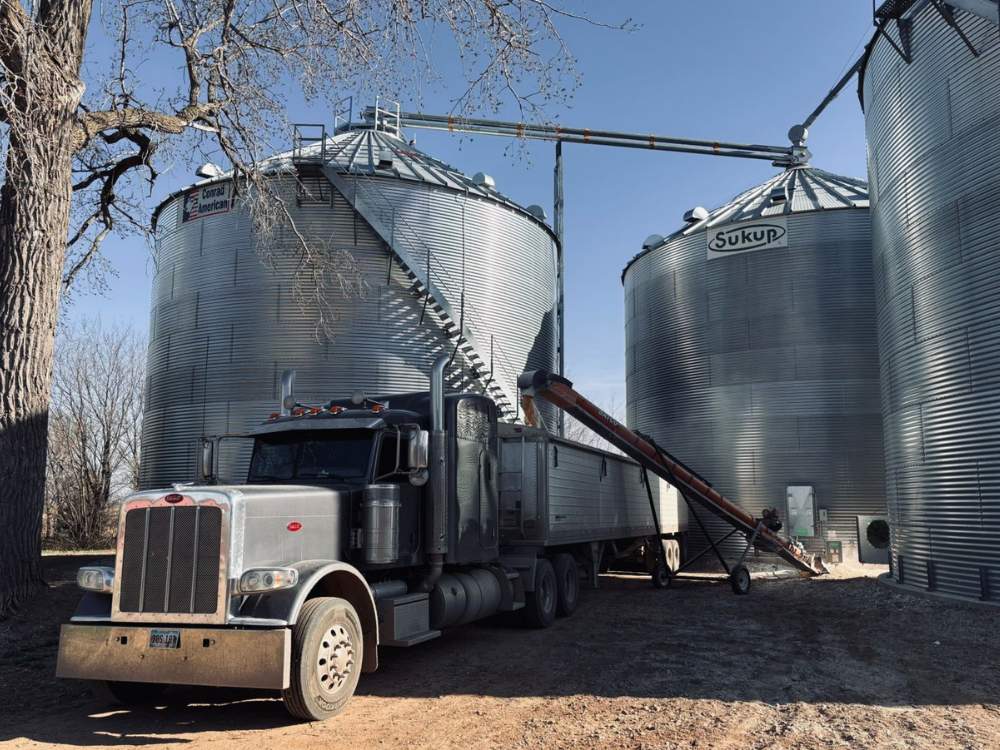
This is a semi truck being loaded with grain at the grain elevator
Different types of grain elevators
Not all grain elevators are the same. H-2A drivers should be familiar with the different types of grain elevators, such as:
Country elevators: Rural grain elevators, also called primary elevators, which are smaller and accept grain from trucks or railcars. These facilities typically specialize in short-term storage, drying, cleaning, and limited blending before moving the grain on.
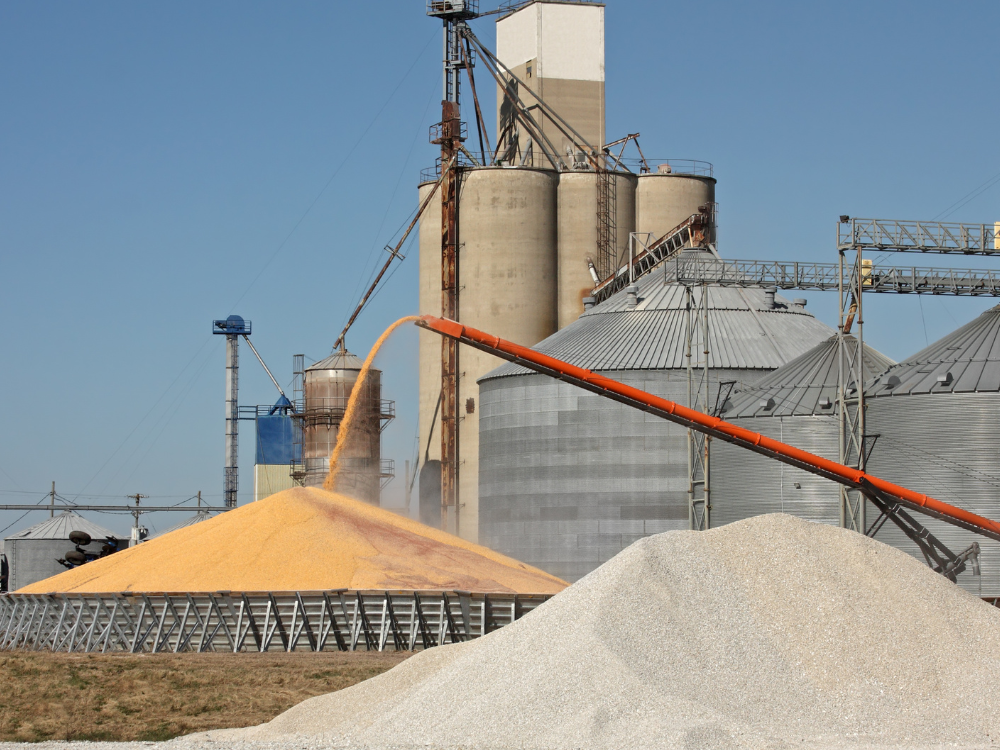
Terminal elevators: Massive grain elevators specializing in storing large quantities of grain. Some terminal elevators can accommodate up to 20 million bushels of grain.
Subterminal elevators: Larger regional facilities that sit between country and terminal elevators. Subterminal elevators are built to handle and load entire unit trains up to 75 railcars, as well as cleaning, blending, and reducing bulk volume year-round for direct transit.
Processing elevators: Specialized grain elevators typically tied directly to a processing plant. There are a couple of different types of processing elevators:
Flour mills: Classify and separate wheat grades for flour.
Feed mills: Process corn, soybeans, and other grains for livestock feed.
Fun fact: America’s largest grain elevator is located in Oklahoma
Grain elevator terms every H-2A driver should know
If you’re going to work as an H-2A driver, it’s important to understand the terminology associated with grain elevators. Here are some of the most common terms and their definitions:
Grain elevator: A facility that receives, handles, and stores grain.
Grain bin/silo: A structure used to store grain.
Scale/weighbridge: A platform that weighs a vehicle.
Scale ticket: A record of a vehicle's weight and often the grain transaction.
Receiving pit: An opening where grain is dumped for handling.
Dump pit: The area where grain is unloaded into the facility's receiving system.
Moisture content: The amount of water contained in the grain (too much moisture could ruin the load).
Bushel: A common U.S. unit used to measure grain, especially for trading and crop yields.
Gross weight: The weight of the loaded truck and its contents.
Tare weight: The weight of the empty truck or vehicle combination, as defined for the weighing transaction.
Net weight: The weight of the grain or other cargo, calculated by subtracting tare weight from gross weight.
PTO (power take-off): A system that transfers power from a truck's engine to auxiliary equipment.
Learn more American farm terms every H-2A worker should know
Understanding the language and common terminology will put you in the best position to succeed and make you a valuable worker for H-2A jobs.
Grain elevator safety procedures for H-2A drivers
Every grain elevator is unique and has different procedures for safely delivering grain. But there are a few best safety practices that H-2A drivers should be aware of:
Follow instructions and wait your turn
Watch for pedestrians, elevator workers, and other foot traffic
Be aware of overhead hazards and truck clearances
Take extra care in the unloading areas
Always wear your PPE
NEVER enter grain bins alone or without authorization
That last point is particularly important for grain elevator safety. We’ve recently heard news of a grain elevator accident that cost someone their life because they got trapped in the grain silo alone. Again, this is not to scare you, but it is intended to help you be aware, cautious, and ensure your own safety.
Read more about the importance of defensive driving on farms
Common grain elevator mistakes H-2A drivers should avoid
Mistakes at the grain elevator can be costly for you and your H-2A employer. It’s important to recognize and avoid some of these common grain elevator mistakes:
Arriving without understanding the delivery instructions.
Ignoring signs or assuming every grain elevator follows the same process.
Failing to check surroundings before maneuvering.
Rushing through drop-off because other trucks are waiting.
Misunderstanding scale tickets or delivery paperwork.
Using unfamiliar unloading equipment without proper instruction.
Failing to communicate when something seems wrong.
It’s also important to remember that a loaded truck handles and drives much differently from an unloaded or empty truck. Always be aware of your load and drive accordingly.
Tips for preparing to work with grain elevators in an H-2A job
Whether you’re about to go over to the U.S. on an H-2A visa or you’re coming to us for training to land that first H-2A job, it’s important to be prepared to work with and around grain elevators. Here are a few tips to help you mentally prepare ahead of time for an H-2A job around grain elevators:
It’s very common for H-2A drivers to deliver or pick up grain at the grain elevators.
H-2A drivers can expect driving alongside harvest equipment, then hauling to grain elevators for a very diverse driving environment.
Understanding terminology and procedures helps you succeed from day one.
Grain delivery procedures might be a big part of the H-2A job; understand these ahead of time and follow directions at the elevators.
Take safety seriously; grain elevators are a common place for accidents, and some accidents can be severe or fatal.
USA Truck Labor prepares you for H-2A driving jobs and grain elevators
Hauling grain to the grain elevators is a small yet important aspect of working H-2A driving jobs in America. At USA Truck Labor, we know firsthand what H-2A jobs entail, and our training programs are designed to prepare you for all aspects. Our main goal is to put you in a position to succeed from day one.
Ready to learn more? Want to grow your skills and have a better chance at landing an H-2A job?