There are many different types of H-2A farm jobs in America and a range of different types of employers, farms, and ag businesses. Some ag employers operate what’s known as a fixed-site crop farm, while others operate businesses that perform services for other farms, known as Farm Labor Contractors (FLCs).
Farm businesses using the H-2A Program for seasonal workers fall into one of these two categories. If you go to work for an FLC, chances are you’ll be working for a business that specializes in providing a service for farmers, such as crop spraying.
But what exactly is a crop spraying business?
Today’s blog breaks down what a crop spraying business is and what they do so you understand the types of businesses you’re going to work for in America.
Types of crop spraying businesses
A crop spraying business is fairly simple. It shows up and sprays the crops for farmers. Ag sprayers might spread the following types of applications on an American farm:
Herbicides: Chemical or natural solutions designed to rid farm fields of invasive weeds, plants, and other vegetation that can harm the crops.
Pesticides: Chemical or natural solutions that rid farm fields of harmful insects and invasive pests such as rodents or moles.
Fungicides: Chemical or natural solutions designed to eliminate the growth and spread of various fungi.
Nutrients and fertilizers: Chemical or organic solutions designed to improve the growing conditions of the soil and the crops to maximize the size and potential of the crops planted. These can be liquid or solid applications.
Some crop sprayers specialize in just one of these applications while others offer all of them. Crop spraying businesses are diverse, so if you’re hired by one of these ag businesses on an H-2A job, you can expect to deliver a range of spray applications to farmers in that region.
Read about the difference between H-2A, H-2B and CDL jobs in America
Types of equipment used by crop spraying businesses
Crop spraying businesses use various types of farm equipment to apply chemicals or organic compounds to the crops. The different types of equipment include:
Self-propelled crop sprayers: A piece of farm equipment designed specifically for spraying crops, similar to a tractor, but a standalone sprayer.
Pull-type sprayers: A tractor implement or attachment pulled behind the tractor to spray the crops.
Chemical tender trucks: Large tanker-style trucks that hold the chemicals in the tank and have a sprayer hose or another attachment to apply the chemicals or compounds.
Nurse tanks and trailers: Large tanks or holding containers that sit on a flatbed truck or trailer and are hauled to the fields to spray the crops.
Aerial application equipment: Airplanes, or Air Tractors, with reservoirs that hold the chemicals and fly over the crops, releasing or spraying the chemicals over the fields as they fly over.
Unless you’re specifically trained as an ag pilot in America with the proper licensing and qualifications, you probably won’t be operating an aerial crop sprayer. However, there are plenty of H-2A ag pilots in America, so if you have the skills and qualifications to fly crop sprayer planes, you will have job opportunities.
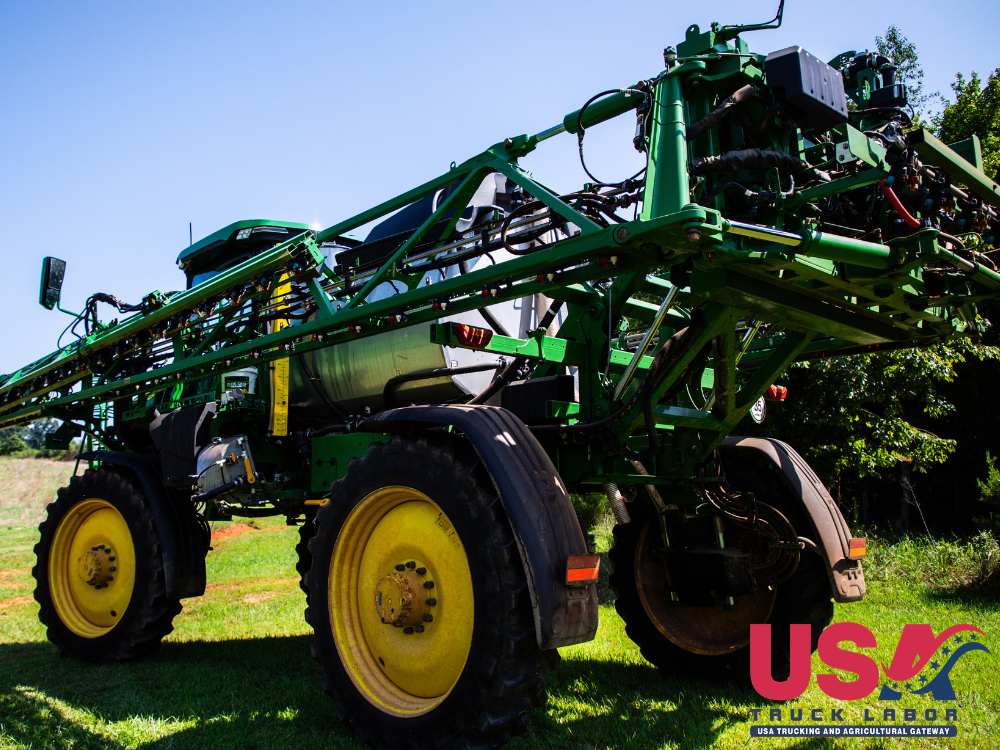
Improve your knowledge by learning about types of harvest equipment in America
How does a crop spraying business provide H-2A jobs?
H-2A jobs are seasonal farm jobs. Crop spraying businesses use H-2A just like any other seasonal farm or ag business. Crop spraying activities can only be done during certain times of the year, specifically when crops are in the ground or the ground is being prepared to plant crops. This short crop spraying window allows for these businesses to hire seasonal workers on the H-2A Visa Program.
Crop spraying jobs can be fun and lucrative in the United States. Many times, crop spraying operations travel from farm to farm in a specific area to provide these services. H-2A workers get to move around, see different farms across the region of America, and rarely are days boring or mundane. Crop spraying jobs keep you moving, pay well, and have a lot of upside compared to fixed-site crop farm jobs. There are several different types of jobs available with a crop spraying business.
Read more about H-2A jobs and farm safety
Types of H-2A jobs available with a crop spraying business
Crop spraying businesses need seasonal crews to do more than simply apply chemicals and compounds to crops or the fields where crops are grown. Some of the different types of H-2A jobs available with crop spraying businesses include, but are not limited to:
Sprayer operators: Operate agricultural spraying machines and apply products to fields and crops.
Truck drivers: Transport water, tanks, equipment, supplies, and other agricultural spraying products between fields or farm locations.
Equipment operators: Operate tractors, loaders, implements or attachments, and other machinery used to support spraying operations.
Ground crew: Assist with equipment preparation, maintenance, loading of chemicals and compounds, and general field support.
Mechanics and maintenance personnel: Keep specialized agricultural equipment operating during busy seasons.
Depending on the H-2A job description, you may perform some or all of these jobs and duties with a crop spraying business. It’s important to have a thorough understanding of the business and possess the skills these employers need to run a profitable, efficient crop spraying operation.
USA Truck Labor’s training programs prepare you for a range of H-2A jobs
You can see from the types of crop spraying equipment and various types of jobs how a background and training in farm truck driving will benefit you for a crop spraying job. Crop spraying businesses need skilled, qualified truck drivers to transport equipment, operate machinery, and haul spraying compounds or chemicals to the fields.
At USA Truck Labor, we prepare candidates for all types of American farm jobs, not just simple truck driving or equipment operating roles. Our 2-day and 4-day training sessions teach you the skills you need to succeed in a crop spraying job, including how to connect trailers, how to drive and operate in tight spaces, and how to maneuver across various terrains like grass, dirt, and gravel.
Ready to take your farm driving and operating skills to the next level?
Book a call online with USA Truck Labor’s resident training director, Jandre Eksteen, to learn more about the programs or to secure your spot in our next session. New training sessions are happening every week, but you must hurry because spots fill up fast.